Serving Lake Forest, Foothill Ranch, Irvine, Mission Viejo and nearby Orange County communities
High-Efficiency AC Installation & Replacement in Orange County, CA
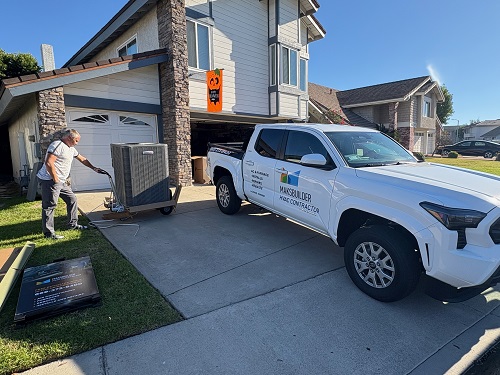
A replacement air conditioner needs to fit the house, not just the old equipment pad outside. Maksbuilder looks at cooling load, duct condition, return air, attic heat, refrigerant setup, thermostat placement, and room-by-room comfort before recommending AC installation or replacement in Orange County.

Why Diagnosis Comes Before AC Replacement
A weak or uncomfortable cooling system is not always a bad condenser. In many homes, the problem starts with a restricted return, leaking attic ducts, a dirty indoor coil, poor refrigerant charge, high static pressure, or equipment that was never sized correctly. Swapping the outdoor unit without checking those issues often leaves the same hot bedrooms, long run times, loud vents, and rising utility bills.
Homes across Lake Forest, Foothill Ranch, Irvine, Mission Viejo, Aliso Viejo, Rancho Santa Margarita, Laguna Hills, Laguna Woods, Laguna Niguel, Tustin, Costa Mesa, and nearby Orange County areas do not all cool the same way. Older tract homes, two-story layouts, attic air handlers, long flexible duct runs, large west-facing windows, and sun-exposed rooms can all change the replacement plan.
A serious AC replacement estimate explains what failed, what will be reused, what needs correction, and how performance will be verified after startup.
When Replacement Is Better Than Another Repair
Some AC problems are still worth repairing. A failed capacitor, clogged condensate drain, weak contactor, thermostat issue, loose wire, or dirty coil may not justify a new system. Replacement becomes the smarter conversation when the unit is aging, losing efficiency, leaking refrigerant, breaking down repeatedly, or failing to cool the home evenly during heavy summer use.
Age matters, but the repair history matters more. A 10- to 15-year-old system that needs major refrigerant or compressor work, runs longer than it used to, or cannot recover indoor temperature on hot afternoons deserves a replacement evaluation. The goal is not to replace equipment early; the goal is to avoid putting expensive repairs into a system that is already close to the end of its useful service life.
Signs Your AC System Needs a Replacement Evaluation
- The air conditioner runs for long cycles, but the home still feels warm.
- Upstairs rooms or sun-facing rooms stay hotter than the rest of the house.
- Electric bills have increased without a clear change in thermostat use.
- The system needs more than one significant repair in the same cooling season.
- Airflow feels weak at supply vents or the return grille sounds loud and restricted.
- The outdoor unit short cycles, shakes, rattles, or struggles during afternoon heat.
- Refrigerant leaks have been found, especially on older equipment.
- The AC blows warm air after the thermostat, filter, and basic airflow checks are ruled out.
Correct Sizing Comes Before Equipment Selection
Bigger equipment does not automatically create better cooling. An oversized air conditioner may bring the thermostat down quickly, then shut off before air is evenly delivered through the house. That creates short cycling, uneven rooms, more wear, and poor humidity control. An undersized system has the opposite problem: it runs nearly nonstop and still cannot recover indoor temperature during peak heat.
A proper AC installation uses more than the old tonnage as a guide. Square footage, insulation, ceiling height, window direction, room layout, occupancy, duct location, attic conditions, sun exposure, and known comfort complaints all affect the load. Manual J supports load calculation, Manual S helps match the equipment, and Manual D keeps the duct system from becoming the weak point of the installation.
Replacing a 3-ton unit with another 3-ton unit may be correct, but that answer needs proof. Many older systems were selected from builder assumptions, rough square-foot rules, or previous comfort complaints that were never diagnosed. Maksbuilder reviews the home conditions before locking in equipment size.
Ductwork and Airflow Decide How the New AC Performs
The outdoor condenser gets most of the attention, but comfort problems often live inside the duct system. Leaky attic ducts, crushed flexible runs, undersized returns, restrictive filters, poor grille sizing, and high static pressure can steal performance from brand-new equipment before cooled air reaches the rooms.
Before AC replacement, the technician needs to check return capacity, visible duct condition, filter restriction, blower setup, static pressure, room complaints, drain routing, and access around the indoor equipment. If the home already has hot bedrooms, noisy vents, weak airflow, or large temperature differences between floors, the replacement plan needs to address those conditions directly.
| Area Checked | What the Technician Looks For | Why It Matters |
|---|---|---|
| Return air | Undersized return grilles, blocked return paths, filter restriction, and loud return noise. | Low return air can reduce cooling capacity, increase noise, and create coil performance problems. |
| Duct condition | Loose connections, crushed flex duct, attic leakage, poor insulation, and damaged runs. | Duct losses can waste cooled air before it reaches occupied rooms. |
| Static pressure | Airflow restriction across the filter, coil, return, supply side, and duct system. | High static pressure makes the blower work harder and can shorten equipment life. |
| Room balance | Hot bedrooms, weak supply vents, closed-off rooms, and uneven second-floor cooling. | A new AC will not solve comfort complaints if the air cannot reach the rooms properly. |
SEER2, EER2 and Real-World Efficiency
SEER2 and EER2 ratings help compare equipment efficiency, but ratings do not fix a bad installation. A high-efficiency AC connected to restricted ductwork, mismatched indoor components, weak return air, or incorrect refrigerant charge will not perform like the rating suggests.
The best value usually comes from the right combination of equipment, airflow, installation quality, and startup testing. A correctly sized system with clean airflow and verified refrigerant performance can feel more stable than a premium unit installed without proper commissioning.
What Professional AC Installation Includes
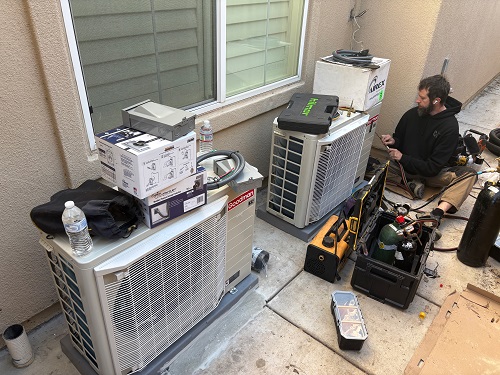
AC installation is not just setting a condenser, connecting lines, and turning the thermostat on. The final result depends on equipment selection, line-set preparation, refrigerant handling, electrical work, condensate drainage, blower setup, controls, airflow, and final startup readings.
California Energy Code, Permits and Field Verification
AC installation and replacement in California involves more than comfort. Residential HVAC work may involve local permits, California Energy Code compliance, equipment efficiency requirements, and field verification or diagnostic testing depending on the project scope.
This matters for the homeowner because documentation protects the project later. Missing permits, skipped forms, or ignored verification steps can create problems during inspection, warranty review, refinancing, resale, or future system changes.
A qualified Orange County HVAC contractor explains which permits, inspections, registry steps, and diagnostic tests apply before the project starts. A very low bid deserves a closer look when it treats compliance, startup testing, or documentation as optional.
How Much AC Replacement Costs in Orange County
AC replacement cost depends on system size, equipment type, efficiency level, indoor coil or air handler configuration, duct condition, access, electrical requirements, condensate drainage, permitting, and any airflow corrections needed. A basic like-for-like replacement usually costs less than a variable-speed system, heat pump conversion, duct redesign, or installation requiring electrical upgrades.
The lowest quote is not always the lowest long-term cost. A cheap installation that skips airflow testing, uses mismatched equipment, ignores duct leakage, or fails to commission the system can lead to poor comfort, higher bills, repeat service calls, and shorter equipment life.
A useful estimate identifies the equipment being installed, what labor includes, whether duct or electrical corrections are needed, how permits are handled, and which startup checks will be completed before the crew leaves.
Questions to Ask Before Choosing an AC Installation Contractor
Before approving AC replacement, ask how the contractor evaluates equipment size, duct condition, return air, static pressure, refrigerant setup, thermostat placement, permits, and final commissioning. The answer should be specific to your home, not a generic equipment package.
Also ask how the installer protects the work area, handles old refrigerant, sets up condensate drainage, registers equipment, explains warranty coverage, and documents startup readings. These details often separate a careful installation from a quick equipment swap.
If the only explanation is “your old unit was 3 tons, so the new one will be 3 tons,” the evaluation is not complete enough for a high-efficiency AC replacement.
Maintenance After a New AC Installation
A properly installed system still needs maintenance. Homeowners should replace or clean filters on schedule, keep supply and return vents open, maintain clearance around the outdoor unit, watch for unusual noise, and schedule professional maintenance before heavy summer use.
Professional maintenance checks coil condition, refrigerant performance, electrical components, blower operation, condensate drainage, thermostat function, static pressure, and overall cooling performance. This is especially important in homes with attic ductwork, pets, renovation dust, allergy concerns, or long cooling seasons.
AC Installation & Replacement Service Areas
Maksbuilder provides AC installation, AC replacement, heat pump installation, airflow correction, and cooling system upgrades for homeowners across Orange County. The service approach focuses on matching the system to the home rather than simply replacing equipment by model size.
Why Orange County Homeowners Work With Maksbuilder
Maksbuilder treats AC replacement as a mechanical system project, not a quick condenser swap. The work starts with the home’s cooling complaints, duct layout, return air, equipment match, refrigerant setup, drainage, controls, compliance needs, and final startup readings.
That approach helps homeowners avoid common replacement problems: hot rooms after installation, noisy airflow, short cycling, unnecessary strain on new equipment, poor temperature recovery, and repeat service calls that come from unresolved duct or airflow issues.
FAQ: High-Efficiency AC Installation in Orange County
Is a high-SEER2 AC always the best choice?
The best choice depends on the house. A higher SEER2 rating can reduce energy use, but sizing, airflow, duct condition, equipment matching, and installation quality have a major effect on real performance.
How long does AC installation usually take?
Many standard residential AC replacements are completed in one day. Projects involving duct changes, electrical upgrades, heat pump conversion, tight access, or additional code work can take longer.
Does ductwork need to be replaced with a new AC system?
Ductwork needs inspection first. If ducts are leaking, undersized, damaged, poorly insulated, or restricting airflow, correcting those problems can make the new system perform much better.
What is the difference between AC replacement and heat pump installation?
A traditional air conditioner provides cooling and is often paired with a furnace for heat. A heat pump provides both cooling and heating through refrigerant-cycle technology, which works well for many Orange County homes.
Why does commissioning matter after installation?
Commissioning confirms that the installed system is operating correctly. Startup checks may include airflow, refrigerant performance, static pressure, temperature split, electrical operation, thermostat setup, and condensate drainage.
Will a new AC fix hot rooms upstairs?
A new AC may help, but upstairs heat problems often come from attic heat, duct leakage, poor return air, duct imbalance, insulation gaps, or oversizing. Those conditions need to be checked before assuming the condenser alone will solve the issue.
Schedule AC Installation or Replacement in Orange County
If your current air conditioner is noisy, unreliable, leaking refrigerant, running too long, or no longer keeping your home comfortable, Maksbuilder can evaluate whether repair still makes sense or whether AC replacement is the better long-term option.
For AC installation and replacement in Orange County, contact Maksbuilder to schedule an in-home estimate.