Furnace Installation and Replacement for South Orange County Homes
MaksBuilder installs and replaces residential gas furnaces across its South Orange County service area. We plan the job around the home’s ductwork, venting, gas and electrical connections, thermostat, and any cooling equipment that will stay in place.
Before equipment is ordered, we confirm the furnace model, sizing basis, required corrections, permit responsibility, and exactly what the estimate includes.
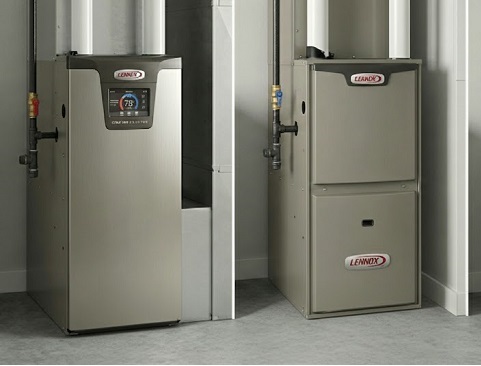
What matters most: A furnace replacement should be sized for the home, matched to the ductwork and any retained cooling equipment, and planned around venting, gas, electrical and controls. In South Orange County, the exact gas-furnace model should also be checked for South Coast AQMD Rule 1111 compliance before it is ordered.
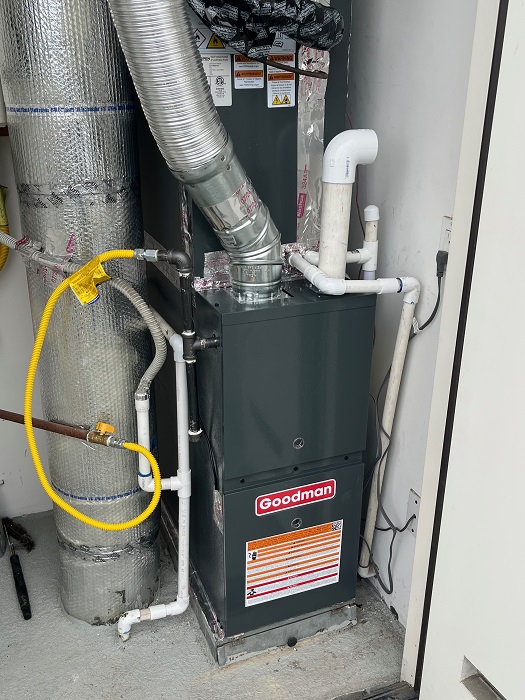
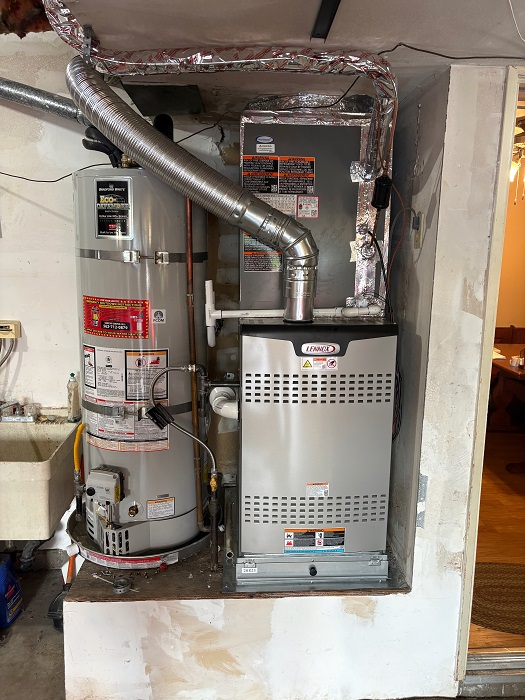
Real Furnace Installations and Site Conditions
Cabinet position, vent type, drainage, gas access, nearby equipment, duct transitions, and service clearance can change the installation scope.
Repair or Replace the Existing Furnace?
Age alone does not require furnace replacement. Repair can remain reasonable when the fault is isolated, suitable parts are available, and no unresolved safety, heat-exchanger, venting, gas, control, or airflow problem remains.
Repair may still make sense
Repair is easier to justify when the failed component and cause are known and follow-up testing can confirm safe operation.
Replacement may make more sense
Replacement is more reasonable when a significant defect cannot be corrected, key parts are unavailable, failures recur, or the furnace cannot work correctly with required venting, controls, airflow, or connected equipment.
For diagnosis of an existing furnace, review Furnace Repair.
Can You Replace the Furnace and Keep the Existing AC?
Yes, in some systems. Furnace replacement does not automatically require a new air conditioner. The existing outdoor AC unit and indoor coil can remain when they are serviceable and compatible with the new furnace, required airflow, controls, cabinet arrangement, duct system, and any applicable rated equipment combination.
When the existing AC can remain
Confirm the indoor-coil model and condition, cabinet fit, cooling airflow, supply and return transitions, filter arrangement, thermostat controls, condensate management, and service access. Where rated-system verification applies, check the retained equipment against applicable manufacturer or AHRI rating data.
When replacing both may make sense
A combined project can be more practical when the retained coil or outdoor unit has condition concerns, required airflow or controls are incompatible, or the equipment combination is no longer suitable. The estimate should clearly identify what remains and what is replaced.
For cooling-equipment replacement, review AC Installation and Replacement.
Should You Consider a Heat Pump Instead of Another Gas Furnace?
When a furnace is being replaced, it is also a good time to compare another gas furnace with an all-electric heat pump or dual-fuel system. The comparison should consider heating and cooling loads, electrical capacity, ductwork, equipment location, installation changes, comfort goals, and current utility rates.
Gas furnace
A gas-furnace option needs suitable gas service, venting, combustion air, Rule 1111 compliance, airflow, controls, and compatibility with the cooling system.
Heat pump
A heat-pump option needs adequate electrical capacity, a suitable outdoor-unit location, proper clearances, airflow and controls, plus a plan for defrost and auxiliary or dual-fuel heat where applicable.
For the detailed electric or dual-fuel option, review Heat Pump Installation.
South Coast AQMD Rule 1111 and Furnace Model Selection
Orange County is within South Coast AQMD jurisdiction. Rule 1111 regulates specified natural-gas-fired fan-type central furnaces, so compliance needs to be checked for the exact furnace model rather than assumed from the brand or product family.
The rule generally establishes a 14 ng/J NOx limit for covered furnace categories. Under the January 9, 2026 amendment, the mitigation-fee alternate compliance option for mobile-home furnaces was extended through September 30, 2030. That exception should not be generalized to standard residential furnace replacements.
Verify the exact model
Record the complete model number and use current manufacturer or South Coast AQMD documentation to confirm the model's Rule 1111 status before ordering.
Compliance is only one selection factor
Rule 1111 compliance does not replace correct sizing, venting, combustion air, duct airflow, service clearance, or manufacturer instructions.
Official references: South Coast AQMD Rule 1111 and South Coast AQMD Certified and Approved Equipment.
Venting, Gas and Airflow Requirements
A gas furnace needs an appropriate fuel supply, safety controls, combustion air where applicable, and approved venting. The blower and ducts must provide required airflow while keeping temperature rise within the manufacturer's listed range.
Carbon monoxide alarms add a safety layer but do not correct combustion, equipment, venting, or combustion-air defects. Placement should follow applicable requirements and manufacturer instructions.
Installation points to verify
What Your Furnace Replacement Estimate Should Include
Furnace model and sizing
Identify the exact furnace model and the sizing basis. Where California Energy Code Section 150.0(h) applies, heating and cooling loads must be determined using one of the listed methods, including the ASHRAE Handbooks, the SMACNA Residential Comfort System Installation Standards Manual, or ACCA Manual J. Furnace heating capacity is then selected in accordance with ACCA Manual S-2023, Table N2.5. Duct capacity and return-air conditions must also support the selected equipment.
Installation, permits and exclusions
Identify required gas, venting, condensate, electrical, thermostat, duct, transition, access, and disposal work together with permit responsibility, applicable Energy Code documentation, and excluded work.
California Energy Code reference: 2025 Single-Family Heating, Ventilation, and Air Conditioning. Field verification and diagnostic testing by an Energy Code Compliance (ECC) Rater is prescriptively required for most HVAC additions and alterations. The project Certificate of Compliance (CF1R) identifies the required verifications; applicable exceptions depend on the specific scope.
Furnace Features That Affect Equipment Selection
Burner staging, blower type, AFUE, and venting describe different furnace characteristics. One does not automatically determine the others.
Single-stage vs. multi-stage heat
A single-stage furnace has one burner output during a heating call. Two-stage and modulating furnaces can operate at more than one heating output depending on equipment design, controls, setup, and demand.
Blower type
Multi-speed and variable-speed describe blower operation, not burner staging. A variable-speed blower does not automatically mean the gas heat is modulating.
Condensing vs. non-condensing
Condensing furnaces use a secondary heat exchanger and produce condensate, requiring approved drainage and model-specific venting. Non-condensing furnaces use a different venting approach and still require existing vent conditions to be reviewed.
AFUE and venting are different
AFUE is a seasonal fuel-use efficiency rating. It does not by itself identify burner staging, blower type, Rule 1111 compliance, or whether a particular direct-vent or sealed-combustion configuration is approved for the furnace.
Furnace Replacement Process
Site and system review
Review access, ducts and return air, venting, gas and electrical connections, controls, drainage, and connected HVAC equipment.
Equipment and written scope
Define the furnace model, sizing basis, required corrections, retained equipment, permits, and included work.
Removal and installation
Remove the existing furnace and complete the agreed venting, gas, electrical, duct, control, drainage, and support work.
Startup and handover
Complete applicable operating checks, then provide the relevant equipment and operating information.
Startup may include gas-joint leak testing, gas-pressure verification, ignition sequence, supply and return temperatures, temperature rise, blower and thermostat setup, condensate drainage, and draft or spillage checks where applicable.
Furnace Installation Service Areas in South Orange County
MaksBuilder provides HVAC service in Foothill Ranch, Lake Forest, and nearby South Orange County communities.
- Foothill Ranch
- Lake Forest
- Irvine
- Mission Viejo
- Aliso Viejo
- Rancho Santa Margarita
- Laguna Hills
- Laguna Woods Village
See all residential service areas at MaksBuilder HVAC Service Areas.
Related HVAC Services
Furnace Installation FAQ
Can I replace my furnace without replacing the AC?
Yes, when the existing AC and indoor coil remain serviceable and compatible with the new furnace's airflow, controls, cabinet arrangement, and applicable rated equipment combination. The retained cooling equipment should be reviewed before the furnace is selected.
How is the correct furnace capacity determined?
Where California Energy Code Section 150.0(h) applies, heating and cooling loads must be determined using one of its listed methods, such as ACCA Manual J, the ASHRAE Handbooks, or the SMACNA residential method. Furnace heating capacity is then selected in accordance with ACCA Manual S-2023, Table N2.5. The old furnace nameplate alone is not a sizing method.
How can I verify Rule 1111 compliance?
Use the complete furnace model number and current manufacturer or South Coast AQMD documentation. Rule 1111 status applies to the exact model, not merely the brand or product family.
Which permits and Energy Code documents apply?
Requirements depend on the local enforcement agency, equipment change, ductwork, project scope, and applicable Energy Code provisions. Under the 2025 Energy Code, ECC field verification and diagnostic testing is prescriptively required for most HVAC additions and alterations. The project's CF1R identifies the required verifications, and projects requiring verification use compliance documents registered through an approved ECC Provider. Specific exceptions can apply.
License status can be verified by entering number 1095368 at CSLB Check a License.
What MaksBuilder Customers Say
“A/C Install was fast, efficient, and well done.”
“So far, my experience with this company has been excellent.”
Request a Furnace Replacement Estimate
Ask for an estimate that clearly lists the proposed furnace, sizing basis, installation work, any equipment that will remain, permit responsibility, and exclusions.