
MaksBuilder installs ducted heat pumps, ductless mini-splits, and hybrid dual-fuel systems for Orange County homes. Before recommending equipment, we review load needs, ductwork, airflow, electrical capacity, thermostat setup, installation access, and comfort problems.
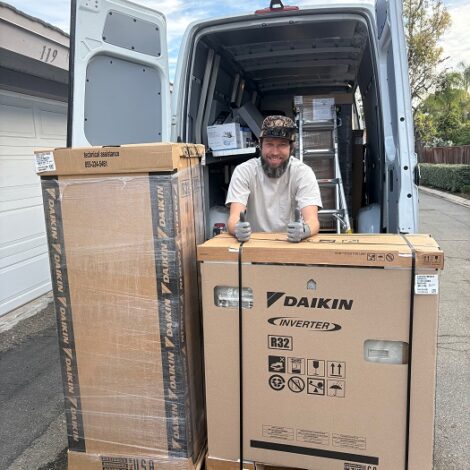
A heat pump can replace or supplement a conventional air conditioner and gas furnace by transferring heat rather than producing it through combustion. In cooling mode, it operates like an air conditioner. In heating mode, the refrigeration cycle reverses and transfers heat indoors. The selected configuration must match the home's heating and cooling requirements, duct capacity, available equipment space, electrical service, and control strategy.
Equipment brand alone does not determine performance. The installation should address system capacity, supply and return airflow, refrigerant-line requirements, condensate drainage, electrical protection, thermostat configuration, and manufacturer startup procedures. These items are reviewed as part of one HVAC system rather than as separate equipment changes.
If an existing unit is not heating, is freezing up, or is showing recurring control or defrost faults, schedule heat pump repair in Orange County before deciding whether replacement is necessary.
A central system can replace the outdoor AC unit and operate with a matched indoor air handler. A ductless mini-split can serve rooms without usable ductwork, while a dual-fuel system can retain a gas furnace for backup heating when that configuration is appropriate for the home.
Performance depends on the building envelope, duct condition, return-air capacity, insulation, window area, equipment location, and thermostat setup. Square footage is only one input and should not be used as the sole basis for equipment capacity.
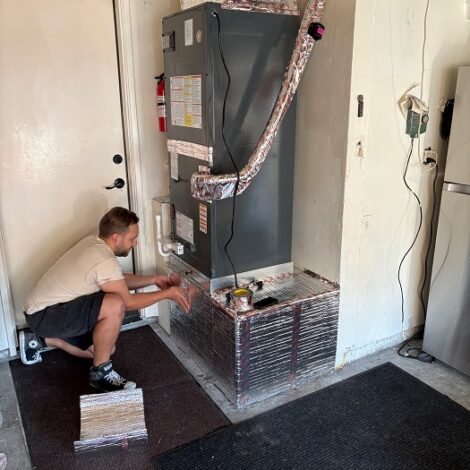
Replacing a gas furnace with a heat pump is not only a box replacement. The old furnace, outdoor AC, duct system, thermostat wiring, condensate drain, refrigerant line set, electrical circuit, and return-air path all affect the final result.
MaksBuilder reviews those conditions before recommending an all-electric conversion, a ducted system with an air handler, a ductless mini-split, or a dual-fuel configuration. The selected equipment must be compatible with the home's duct capacity, electrical service, available installation space, thermostat controls, and heating requirements.
System choice depends on the building layout, existing HVAC infrastructure, room use, electrical capacity, and installation access. A two-story Lake Forest home with existing ducts, an Irvine townhouse, a Mission Viejo ADU, and a Rancho Santa Margarita home near the foothills may require different equipment and control strategies.
A central ducted heat pump uses the home’s duct system to deliver cooling and heating through existing registers. This is often the cleanest option when the ductwork is properly sized, sealed, insulated, and able to move enough air.
Ductless systems provide zoned comfort without extending ducts. They are useful for converted garages, bonus rooms, additions, home offices, and areas that never feel comfortable with the main HVAC system.
A hybrid system uses the heat pump for normal cooling and heating while keeping a gas furnace as backup. This can make sense when the homeowner wants heat pump efficiency but is not ready for a full all-electric conversion.
Correct sizing is important because the selected system must satisfy both the cooling load and the heating requirement without excessive cycling or unnecessary reliance on backup heat. Oversizing can shorten run times, reduce room-to-room consistency, and increase wear. Undersizing can reduce heating capacity during cooler periods and place greater demand on auxiliary heat when it is installed.
Equipment selection considers insulation, window area and orientation, ceiling height, air leakage, duct location, return-air path, room use, and local design conditions. A formal load calculation is completed when required by the project scope, permit, or equipment-selection process. Square footage alone is not treated as a complete sizing method.
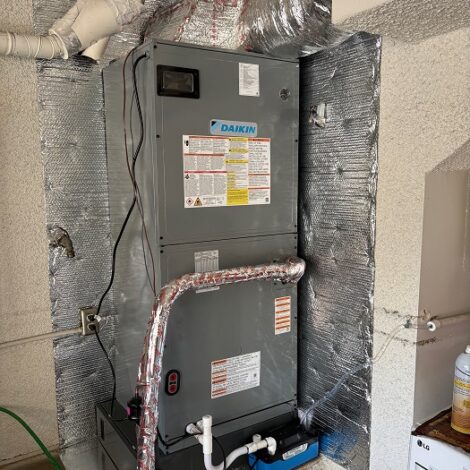
A smooth installation starts before the crew arrives. We evaluate the existing system, explain the options clearly, prepare the work area, protect the property, install the equipment, and test the system before the job is complete.
We inspect the existing AC, furnace, ductwork, thermostat, electrical panel, condensate drainage, equipment location, installation access, and comfort complaints. This shows whether the project is a straightforward replacement or a full conversion.
We recommend a ducted, ductless, or hybrid setup based on load, airflow, sound expectations, efficiency goals, installation access, and budget. You get a clear explanation before approving the work.
The crew installs the outdoor heat pump, indoor air handler or indoor heads, refrigerant connections, electrical components, controls, drain lines, and needed transitions with clean workmanship.
Startup includes verifying thermostat calls, heating and cooling operation, blower settings, supply and return airflow, condensate drainage, electrical connections, auxiliary-heat staging when installed, and refrigerant charge according to the manufacturer's procedure. Applicable fault codes and control settings are reviewed before the homeowner walkthrough.
Incentive availability changes and should be verified before it is included in a project budget. The federal Energy Efficient Home Improvement Credit is not available for property placed in service after December 31, 2025. As of July 13, 2026, HEEHRA single-family rebates are fully reserved statewide, and TECH Clean California single-family heat pump HVAC incentive funding is fully reserved.
Homeowners should confirm any utility-specific program directly with the utility and review current program rules before approving equipment based on an expected rebate. Financing may be available for qualified customers and is separate from rebates, tax credits, or program reservations.
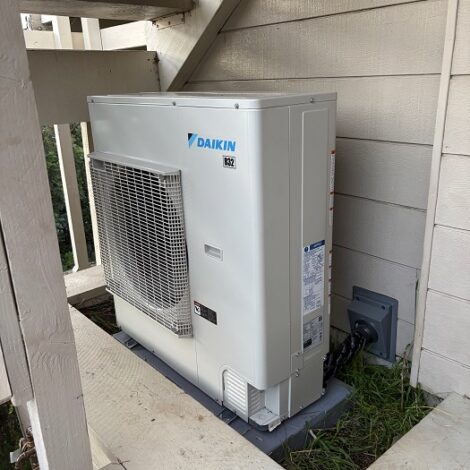
An all-electric system can be appropriate when the home has adequate electrical capacity, suitable equipment locations, and a distribution system that can deliver the required airflow. A hybrid configuration may be considered when the homeowner wants heat-pump operation for normal conditions while retaining a compatible gas furnace for backup heating.
This work requires more than replacing an outdoor condensing unit. Before installation, the project should determine whether the ducts can move the required airflow, where the air handler will fit, whether the electrical panel and branch circuits are adequate, how thermostat stages will be controlled, and whether auxiliary or gas backup heat is needed.
Yes. Modern air-source heat pumps can provide heating in conditions colder than typical Orange County winter weather. The important details are correct model selection, load-based sizing, airflow, and startup testing.
Operating cost depends on electricity rates, gas rates, solar production, insulation, duct condition, thermostat habits, and equipment efficiency. A heat pump can be highly efficient, but cost should be evaluated for the specific home.
Not always. Existing ducts may be reused if they are properly sized, sealed, insulated, and balanced. If we find duct leakage, undersized returns, crushed flex duct, or poor airflow, duct improvements may be recommended.
Yes. A dual-fuel hybrid system can use the heat pump for normal heating and cooling while keeping a gas furnace as backup. This option can be useful for homeowners who want efficiency benefits without fully removing gas heating.
Timing depends on system type, duct changes, electrical work, permits, access, and whether the project is a full gas furnace conversion. MaksBuilder explains the expected schedule before work begins.
The assessment reviews the existing HVAC equipment, ductwork, electrical capacity, installation access, thermostat requirements, and reported comfort problems. MaksBuilder can then compare central, ductless, and dual-fuel configurations and explain the work required for each option.