Furnace Checklist
What Is Included in Furnace Maintenance?
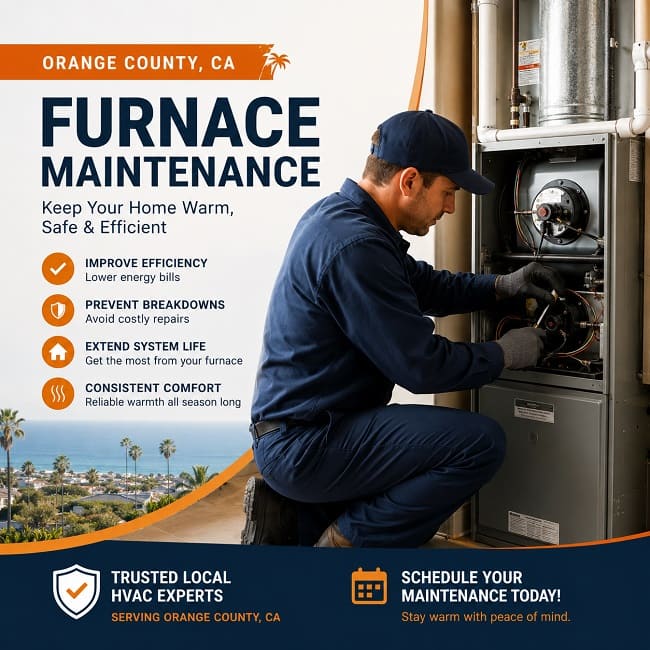
The exact procedure depends on furnace design, manufacturer requirements, installation and system condition. The service follows the heating system through its operating sequence and checks accessible components that affect ignition, combustion, heat transfer and airflow.
Thermostat Call for Heat
The furnace is operated from the thermostat to confirm that it receives a heating demand, starts when heat is requested and shuts down after the call is satisfied. Obvious thermostat-setting or communication problems can be identified at this stage.
Ignition Sequence
On an induced-draft gas furnace, startup may include inducer operation, pressure-switch confirmation, igniter operation, gas-valve activation, burner ignition and flame proving. Repeated ignition attempts or unexpected shutdowns require further diagnosis.
Flame Observation
Burner flame is observed where equipment design permits safe access. The technician looks for unstable operation, delayed ignition or visible behavior that differs from normal burner operation.
Safety Controls
Accessible safety-related controls are reviewed as appropriate for the furnace. Repeated limit trips, pressure-switch faults or other interruptions should be investigated rather than repeatedly reset or bypassed.
Blower Operation
The indoor blower is checked for normal startup, running behavior and shutdown. Unusual noise, weak airflow or delayed operation can indicate a blower, airflow or control issue.
Filter and Return Air
The filter and accessible return-air path are checked for obvious restriction. A heavily loaded filter can reduce airflow through the furnace and increase equipment operating temperature.
Temperature Rise
When appropriate, return-air and supply-air temperatures are compared. The result should be evaluated against the range listed on the furnace rating plate or in manufacturer documentation.
Visible Venting Inspection
Accessible venting is visually reviewed for obvious disconnection, deterioration, improper support or other visible conditions that may interfere with normal exhaust flow.
Accessible Gas Piping and Connections
Visible gas piping and connections near the furnace can be reviewed for obvious corrosion, damage or conditions that justify closer evaluation.
Accessible Heat Exchanger Areas
Where furnace design and normal service access permit, accessible heat exchanger areas can be visually reviewed for obvious deterioration or abnormal conditions.
Electrical and Control Connections
Accessible wiring, terminals and control components can be reviewed for visibly loose, damaged or overheated connections. Repair or component replacement is separate from routine maintenance.
Condensate Components
On high-efficiency condensing furnaces, accessible condensate tubing, drains and traps can be checked for obvious blockage, leakage or deterioration.