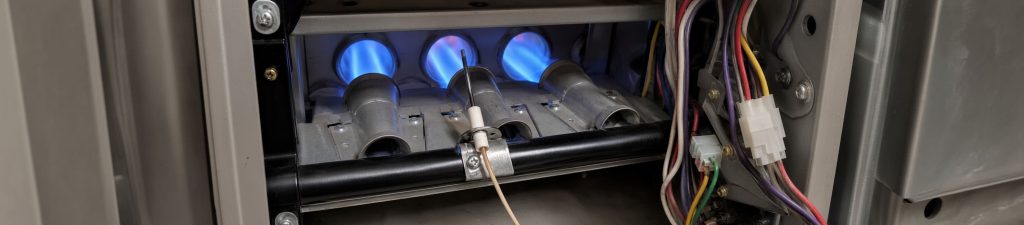
If a gas furnace lights normally but the burners shut off a few seconds later, the furnace may be failing to prove that a stable flame is present. A contaminated or damaged flame sensor is one possible cause, but a weak flame-sensing signal can also result from burner problems, poor grounding or bonding, wiring faults, incorrect sensor position, or a furnace control or ignition-control problem.
Short answer: burners that ignite and then shut down within seconds often point to a flame-proving problem. Flame proving is the furnace control's confirmation that burner flame is actually present after the gas valve opens. The flame sensor is part of that circuit, but cleaning or replacing the sensor without checking the rest of the flame-proving path can miss the actual fault.
Why Does a Furnace Light and Then Shut Off?
Shutdown timing is an important diagnostic clue. Burners that light and lose flame within several seconds suggest a different problem from a furnace that heats normally for several minutes and then shuts down.
| What you observe | What it may suggest | What should be checked |
|---|---|---|
| Igniter operates but burners never light | This is not the classic flame-sensor pattern because flame is never established. | Ignition system, gas supply, gas-valve operation, burner condition and control sequence. |
| Burners light and shut off within a few seconds | Flame may be present but not successfully proven by the furnace control. | Flame signal, sensor condition and position, burner flame, grounding, wiring and control circuit. |
| Only part of the burner assembly lights correctly | Poor flame carryover or burner condition may prevent stable flame at the sensing location. | Burner assembly, flame carryover, flame pattern and sensor location. |
| Furnace heats for several minutes and then shuts down | This is less consistent with an immediate flame-proving failure. | Airflow, temperature rise, limit circuit, venting and other operating conditions. |
Burners shutting off within seconds of ignition are not the same diagnostic pattern as ordinary furnace short cycling. Immediate burner shutdown points first toward ignition, flame establishment and flame proving.
What Does the Furnace Flame Sensor Actually Do?
On furnaces that use a separate flame-sensing rod, the sensor sits in the intended burner flame and connects to the furnace control or ignition control. Many systems use flame rectification: ionized combustion gases allow a very small electrical current to pass through the flame-sensing circuit.
The control monitors that current as proof that burner flame is present. If a valid flame signal is not established or maintained, the control closes the gas valve instead of continuing gas flow without proven flame.
Flame must reach the sensor
The sensing rod must be correctly positioned in the intended burner flame.
The electrical path must be reliable
Burner grounding, equipment grounding, bonding and electrical connections affect the flame-current path.
The control must recognize the signal
Wiring and the furnace or ignition control must receive and interpret the flame-sensing current correctly.
What Happens During a Normal Furnace Ignition Sequence?
Exact timing varies by furnace model, but many induced-draft gas furnaces follow a sequence similar to this:
Common Symptoms of a Flame-Proving Problem
Burners light, then go out
The clearest pattern is successful burner ignition followed by gas-valve shutdown within several seconds.
Repeated ignition attempts
Depending on the control logic, the furnace may retry the ignition sequence after flame is not successfully proven.
Intermittent heat or lockout
A marginal flame signal may work on some cycles and fail on others, sometimes ending in a stored fault or lockout.
Dirty Flame Sensor vs Failed Flame Sensor
A contaminated sensor, a physically damaged sensor and a weak flame-sensing signal are different conditions. A weak signal does not automatically mean the sensing rod itself has failed.
| Condition | What it means | Diagnostic direction |
|---|---|---|
| Contaminated sensing rod | Deposits or oxidation may interfere with reliable flame-current detection. | Inspect and service the sensor as appropriate, then verify the flame signal. |
| Physically damaged sensor | The rod, ceramic insulator, mounting or connection may be damaged. | Physical damage may require component replacement or correction of the mounting or connection. |
| Clean sensor but weak flame signal | The fault may be elsewhere in the flame-proving circuit. | Check flame position, burner condition, grounding, wiring and the furnace or ignition control. |
| Intermittent flame signal | The circuit or burner flame may become unstable only under certain operating conditions. | Test the furnace while the failure is occurring rather than relying only on a visual inspection. |
Why the Burners Can Shut Off Even When the Flame Sensor Is Not the Problem
Grounding, bonding or polarity problems
Flame rectification depends on a reliable electrical return path. Poor furnace grounding, bonding, reversed polarity on equipment where polarity matters, or a high-resistance connection can interfere with flame detection.
Flame sensor wiring
Loose terminals, damaged conductors or poor connections can weaken or interrupt the small flame-sensing current before it reaches the control.
Burner flame or carryover problems
Burner contamination, deterioration or poor flame carryover can leave the sensing rod outside a stable flame even though part of the burner assembly appears to ignite.
Incorrect sensor position
A clean and electrically sound sensing rod cannot prove flame reliably if the intended burner flame does not properly reach it.
Furnace or ignition-control fault
The electronic control monitors the flame-sensing circuit. A fault in that control or its connections can therefore resemble a bad flame sensor.
Unstable burner flame
Burner or gas-delivery conditions can produce an unstable flame that does not maintain a reliable flame-proving signal.
How Technicians Test the Flame-Proving Circuit
Diagnosis should follow the ignition sequence and verify the flame signal before a sensor or control is replaced.
Observe the ignition sequence
The technician identifies where normal operation stops: ignition, flame carryover, flame proving or another safety stage.
Inspect the burner flame and sensor
The sensing rod is checked for contamination, physical damage and correct position in the intended burner flame.
Measure flame current
Depending on the equipment and service procedure, technicians can measure DC microamp flame current in the flame-sensing circuit and compare the result with manufacturer specifications.
Check the electrical path
Grounding, bonding, applicable polarity conditions, wiring and connections are checked when the flame signal is low or unstable.
There is no single flame-current threshold that applies to every furnace. Flame-signal readings should be interpreted using the service information for the specific furnace or ignition control.
Can a Homeowner Safely Check Anything?
Yes, but homeowner checks should stay outside the gas, combustion and live electrical parts of the furnace.
Useful observations
- Confirm that the thermostat is set to Heat.
- Note whether the burners actually ignite.
- Estimate how many seconds the burners remain on.
- Note whether the indoor blower ever starts.
- Record whether the failure happens every cycle or only intermittently.
- Record a visible fault code without bypassing the furnace door safety switch.
Avoid unsafe DIY testing
- Do not bypass the furnace door switch or another safety control.
- Do not jumper pressure, rollout or limit switches.
- Do not adjust the gas valve or gas pressure.
- Do not probe live electrical terminals without appropriate training and test equipment.
- Do not repeatedly reset a furnace that continues to fail.
A clogged filter is worth checking if the furnace runs for a longer period before shutting down, but a filter restriction by itself is not the typical explanation for burners that extinguish only seconds after ignition.
Stop using the furnace and address the safety issue first if you smell gas, hear delayed or explosive ignition, see soot or flame rollout, notice a strong electrical burning odor, or a carbon monoxide alarm activates. If you suspect a gas leak, leave the affected area and contact the gas utility or emergency services from a safe location.
Why Repeated Furnace Restarts Are Not a Diagnosis
Cycling furnace power may clear a temporary lockout and allow another ignition attempt, but it does not identify why flame proving failed. A marginal flame signal can also work on one heating cycle and fail on the next.
If the burners repeatedly light and shut off within seconds, do not rely on furnace resets as a routine way to restore heat. The ignition and flame-proving sequence should be diagnosed.
When Professional Furnace Diagnosis Is Needed
Professional diagnosis is appropriate when the burners repeatedly ignite and shut off within seconds, the furnace enters lockout, or the problem returns after the flame sensor has already been serviced. Intermittent failures also deserve testing because a marginal signal or connection may fail only under certain operating conditions.
The diagnosis should establish whether the burners ignited correctly, whether flame reached the sensing rod, whether a stable flame signal was produced, and whether the furnace or ignition control recognized that signal.
Frequently Asked Questions
Does a furnace that lights and shuts off always have a bad flame sensor?
No. Burners that shut off within seconds often point toward the flame-proving circuit, but the cause can be a contaminated or damaged sensor, poor burner flame, incorrect sensor position, grounding, wiring or a furnace or ignition-control problem.
How quickly can a flame-proving problem shut the burners off?
A flame-proving failure usually becomes apparent shortly after burner ignition because the furnace must confirm flame before allowing gas flow to continue. Exact timing and retry logic vary by furnace and control.
Can a dirty flame sensor cause intermittent heating?
Yes. Sensor contamination can contribute to a weak flame-sensing signal, but intermittent operation can also result from grounding, wiring, burner flame or control-circuit problems.
Should I keep running the furnace if the burners repeatedly shut off?
Repeated immediate shutdowns should be diagnosed rather than managed with repeated resets. Stop furnace operation immediately if there is a gas odor, abnormal ignition, flame rollout, soot, an electrical burning odor or a carbon monoxide alarm.
Technical Sources
Flame-current specifications and diagnostic procedures vary by furnace and control. Manufacturer service information should be used when interpreting flame-signal measurements.
- Lennox Residential Communicating Systems — Alert Code Guide, including GF Low Flame Current troubleshooting: https://www.lennox.com/dA/d89d9db1dd/100017c.pdf
- Goodman Service and Troubleshooting — integrated ignition control, grounding and flame-sensing guidance: https://mobile.goodmanmfg.com/mobileapp/stellent/pdf/infoPdf/Lit/RS6621301.pdf
Burners Light but Will Not Stay On?
MaksBuilder can diagnose furnace ignition and flame-proving problems, including sensor, burner, grounding, wiring and control-circuit faults, before recommending a repair.
Furnace Repair in Orange County