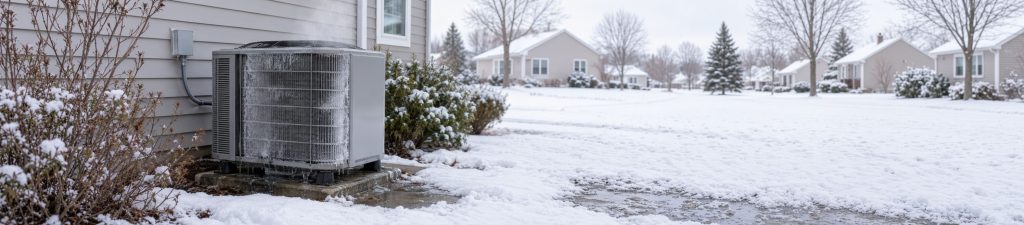
A heat pump defrost cycle is normal when temporary frost melts and normal heating returns afterward. Steam, meltwater, a brief fan stop and temporarily cooler supply air can also occur. Persistent heavy ice or heating that does not recover may indicate a problem.
Usually normal
- Thin frost on the outdoor coil
- Steam during defrost
- Water beneath the outdoor unit
- A brief change in operating sound
- The outdoor fan stopping temporarily
- Heating returning after the cycle ends
Needs attention
- Heavy ice that does not clear
- Ice repeatedly covering most of the coil
- Ice blocking or reaching the outdoor fan
- Repeated defrost attempts without clearing the coil
- Heating that does not recover afterward
- Burning odors, smoke or repeated breaker trips
What Is a Heat Pump Defrost Cycle?
An air-source heat pump heats the home by absorbing heat from outdoor air and moving it indoors. In heating mode, the outdoor coil becomes cold enough that moisture in the air can condense and freeze on its surface.
A light layer of frost does not automatically indicate a malfunction. The problem begins when frost becomes thick enough to restrict airflow and interfere with heat transfer.
The heat pump defrost cycle is the system's automatic way of removing that frost. Most conventional air-source heat pumps use reverse-cycle defrost, temporarily directing hot refrigerant through the outdoor coil. Once the coil is warm enough and the defrost sequence is complete, the system returns to heating mode.
There is no universal defrost interval. The start and end of a cycle depend on the equipment design and may be based on coil temperature, outdoor temperature, accumulated runtime, sensor data or a combination of these factors.
Why Does Frost Form on the Outdoor Coil?
Frost can form because the outdoor coil is colder than the surrounding air while the heat pump is heating the home. The coil surface may drop below freezing even when the outdoor air temperature is above 32°F.
Frost is more likely during:
- cool, humid weather;
- fog, drizzle or other damp conditions;
- long heating cycles;
- conditions that keep the outdoor coil below freezing.
This means frost can occasionally appear during cool, damp weather in South Orange County without indicating equipment failure. What matters is whether the heat pump can clear that frost and return to normal heating.
What Normally Happens During Defrost?
Refrigerant flow changes
On a typical reverse-cycle system, the reversing valve changes refrigerant flow so the outdoor coil can warm and melt frost.
The outdoor fan may stop
Many systems temporarily stop the outdoor fan during defrost so the coil can warm more quickly.
Steam and water may appear
Frost melting from the warmed coil can create visible water vapor and water beneath the outdoor unit.
The sound may change
A brief whoosh, compressor-tone change or fan shutdown can accompany the transition into or out of defrost.
On systems equipped and configured with electric auxiliary heat, the controls may energize the heat strips during defrost to offset temporary indoor cooling. Equipment without that arrangement may deliver cooler air from the vents for a short time.
The exact sequence varies by model, so the manufacturer's operating and service information for the installed heat pump takes priority over general rules.
How Much Frost on a Heat Pump Can Be Normal?
A thin, temporary frost layer can be normal. A thick layer of ice that remains, repeatedly returns without clearing or begins to block airflow is not the same condition.
| What you see | What it usually means |
|---|---|
| Thin frost develops and later disappears | Typical cold-weather heat pump operation |
| Steam appears while frost is melting | Normal defrost behavior |
| Water appears beneath the unit after defrost | Usually meltwater from the outdoor coil |
| Heavy ice remains after repeated operation | May indicate a defrost, airflow or equipment problem |
| Ice reaches or blocks the fan | Stop operation to avoid mechanical damage |
Is Steam Coming From a Heat Pump Normal During Defrost?
Yes. Steam or a cloud of water vapor from the outdoor unit can be normal during a heat pump defrost cycle.
The outdoor coil warms during defrost while frost and ice melt. In cool, humid air, that moisture can create a visible cloud that may initially look like smoke.
Normal defrost steam should appear around the outdoor coil, dissipate into the air and stop when the system returns to ordinary heating.
Steam is different from an electrical problem
Turn the system off if there is a burning or electrical odor, sparking, visible smoke that does not behave like water vapor, or a breaker that repeatedly trips.
Is Water Under the Outdoor Unit Normal?
Yes, water beneath an outdoor heat pump can be normal during heating season. Defrost melts frost from the outdoor coil, and that meltwater drains through or beneath the cabinet.
A temporary wet area or puddle beneath the outdoor unit is therefore different from water around an indoor air handler, ceiling or wall.
Water beneath the outdoor unit becomes more concerning when drainage is obstructed and repeated freezing produces a large mass of ice around the base or interferes with the equipment.
Why Might the Air From the Vents Feel Cooler During Defrost?
During reverse-cycle defrost, the heat pump temporarily sends heat toward the outdoor coil. That can reduce the amount of heat being delivered indoors for a short period.
Electric auxiliary heat may compensate on systems designed and configured to use it. Other systems may briefly deliver air that feels cooler than normal.
The important distinction is recovery: after defrost ends, the heat pump should return to heating mode and indoor heating should resume. Continued cool air or poor heating after the cycle has ended should not be dismissed as normal defrost.
What Signs Suggest the Heat Pump Is Not Defrosting Correctly?
Defrost behavior becomes more concerning when the system cannot clear ordinary frost or cannot return to normal heating afterward.
- Heavy ice stays on the coil. The outdoor coil remains substantially covered instead of clearing.
- Ice blocks airflow or reaches the fan. This can interfere with fan operation and heat transfer.
- Defrost appears to occur but does not clear the coil. Repeated mode changes without successful frost removal require investigation.
- Heating does not recover. The system continues blowing cool air or produces inadequate heat after the apparent defrost cycle ends.
Frequent or unexpected auxiliary-heat operation in relatively mild weather can also justify a closer look, but it is not by itself proof of a defrost failure.
What Can Cause Excessive Ice Buildup?
Heavy outdoor ice is a symptom, not a diagnosis. Several different problems can prevent a heat pump from clearing frost normally.
Defrost sensor or control problem
A temperature sensor, thermistor, control board, wiring problem or other part of the defrost-control sequence may prevent defrost from starting or ending correctly. The exact components depend on the heat pump model.
Outdoor fan or airflow problem
The outdoor fan must move air through the coil during normal heating operation. A failed fan, damaged blade, blocked coil or heavy debris around the outdoor unit can reduce airflow and contribute to abnormal icing.
Refrigerant-system problem
Refrigerant-circuit faults can affect coil temperature and heating performance. However, visible ice alone does not prove that refrigerant charge is low. Refrigerant conditions must be evaluated together with airflow, operating temperatures and equipment-specific measurements.
Reversing-valve or related control problem
Reverse-cycle defrost depends on the heat pump changing refrigerant flow. A reversing-valve or control fault can interfere with that process.
Drainage or ice around the base
Meltwater needs a clear path away from the unit. Poor drainage or repeated refreezing beneath the cabinet can create secondary ice buildup even when the coil itself is able to defrost.
Severe indoor airflow restrictions can affect overall heat-pump performance and should be checked when heating is abnormal, but a dirty indoor filter alone should not be assumed to explain persistent outdoor icing.
How Technicians Diagnose a Defrost Problem
Diagnosis should confirm why frost is not clearing rather than simply remove the visible ice. Depending on the system, a technician may compare outdoor-air and coil temperatures, verify sensor readings, confirm defrost initiation and termination, check outdoor-fan and reversing-valve operation, and evaluate refrigerant-system performance when indicated.
Measurements and the manufacturer's sequence of operation are more reliable than replacing a sensor, control board or adding refrigerant based on ice alone.
When Should the Heat Pump Be Turned Off?
Light frost, ordinary defrost steam and meltwater are not reasons by themselves to shut down a heat pump.
Turn the affected system off if:
- ice prevents the outdoor fan from rotating;
- the fan is striking accumulated ice;
- there is severe grinding or scraping;
- you smell burning or see electrical smoke or sparking;
- a breaker repeatedly trips;
- water is reaching electrical components;
- severe ice continues building instead of clearing.
Do not repeatedly reset a breaker that trips again. Do not chip ice from the coil with a screwdriver, hammer, scraper or other tool, because the coil fins and refrigerant tubing can be damaged.
Do not pour boiling or very hot water over frozen equipment. If the heat pump is severely iced, removing the visible ice does not correct the underlying cause.
Frequently Asked Questions
How long does a heat pump defrost cycle last?
There is no universal duration. The cycle length depends on the equipment, outdoor conditions, frost accumulation and control strategy. The useful test is whether the frost clears and normal heating returns afterward.
How often should a heat pump go into defrost mode?
There is no single correct interval for every heat pump. Some equipment uses demand-defrost logic based on sensor conditions, while other designs also use accumulated operating time. The manufacturer's control sequence determines what is normal for the installed model.
Can a heat pump defrost when it is above freezing outside?
Yes. The outdoor coil can be colder than the surrounding air during heating operation, so its surface may fall below freezing even when the outdoor air is above 32°F.
Does AUX heat during defrost mean something is wrong?
Not necessarily. On systems equipped and configured with electric auxiliary heat, the controls may use it during defrost to offset temporary indoor cooling. Unexpected or unusually frequent AUX heat outside normal operating conditions can still justify further evaluation.
Should I remove ice from the heat pump myself?
Do not chip or scrape ice from the outdoor coil. If ice is heavy enough to interfere with the fan or does not clear during normal operation, turn the system off when necessary to prevent damage and have the cause identified.
The Bottom Line
Temporary frost that melts and is followed by normal heating is usually part of ordinary heat pump operation. Persistent heavy ice, a blocked fan or heating that does not return after defrost points to a condition that needs diagnosis.
- Trane — Heat Pump Defrost Cycle: https://www.trane.com/residential/en/resources/blog/what-is-heat-pump-defrost-cycle/
- Lennox — What to Do If Your Heat Pump Is Frozen: https://www.lennox.com/residential/lennox-life/consumer/heat-pump-frozen