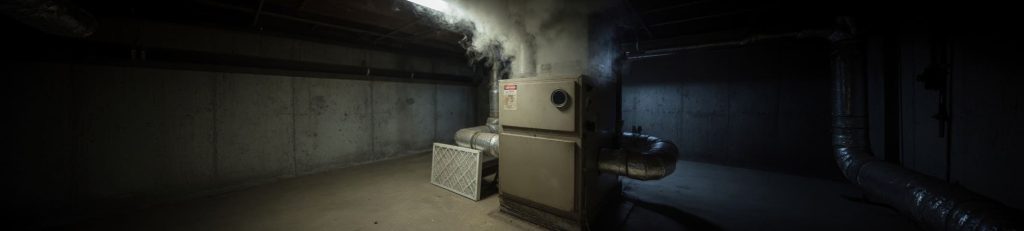
Which Furnace Smells Are Normal — and Which Are Dangerous?
A brief dry, dusty smell on the first heating cycle after summer may be normal if it fades. A burning-plastic, electrical, gas, smoky, or exhaust-like odor is different: stop using the furnace, and respond immediately to signs of fire or a gas leak. Smell alone cannot identify which component has failed.
Pay attention to timing and accompanying signs. New buzzing, weak airflow, soot, repeated shutdowns, or a carbon monoxide alarm changes the urgency. This guide focuses on residential gas furnaces, not portable or electric heaters.
Gas Odor, Fire, or CO Alarm: Leave the Building
If you smell gas, hear escaping gas, see fire or substantial smoke, or a CO alarm sounds, get everyone outside. Do not operate thermostats, lights, appliances, garage-door controls, or anything that could create a spark. Call the gas utility or emergency services from a safe location; follow their instructions before re-entering.
Furnace Smells at a Glance
Dry or Dusty
May occur during first seasonal startup. Only treat it as ordinary dust if it fades and nothing else seems wrong.
Burning Plastic or Wiring
Turn heating off if safe. Wiring, a motor, or a control component may be overheating.
Rotten Eggs or Sulfur
Possible gas leak. Leave immediately; call the gas utility or emergency services from outside.
Smoke, Soot, or Exhaust
Stop using the furnace. Burner, combustion-air, or venting problems need evaluation.
Carbon Monoxide
CO has no odor. If the CO alarm activates, evacuate and call emergency services.
Musty or Damp
Moisture in a filter, ducts, or nearby materials may be responsible; it is not specific to a furnace fault.
When a Burning Smell May Be Seasonal Dust
Dust can settle on hot furnace and duct surfaces while heating is not in use. It may produce a mild dry smell on the first cycle. Seasonal dust is more plausible when:
- The odor begins on the first heating call after a long break and gradually fades.
- The blower and heating cycle operate normally.
- There is no smoke, soot, fuel-gas odor, sparking, or unusual noise.
- The smell does not return or get stronger during later cycles.
Do not leave a furnace running to “burn off” an unidentified smell. If it persists, intensifies, or turns electrical or smoky, stop heating and have the cause checked.
Burning Plastic or Electrical Smell
Hot-plastic, melting-insulation, or electrical odors are not typical seasonal dust. A furnace can still produce heat while an electrical component overheats. Switch heating off if it is safe and no gas, fire, or active smoke emergency requires immediate evacuation. Do not restart just to reproduce the smell.
Possible Sources
- Loose or overheated electrical terminals and wiring.
- Blower motor windings or a motor under excessive load.
- Relays, controls, or a capacitor on an applicable motor.
- Foreign material contacting a hot component.
Clues to Report
- Buzzing, unusual motor noise, or repeated clicking.
- Weak airflow or a blower that stops unexpectedly.
- Odor near the cabinet or one specific register.
- A tripped breaker or an early heating shutdown.
Do not open electrical panels or repeatedly reset a breaker. A technician needs to find the overheating source before the unit runs again.
Rotten-Egg or Gas Odor
Natural gas delivered to homes is odorized to help detect a leak. A sulfur-like or rotten-egg smell is a reason to leave, not to search inside the furnace. The absence of odor does not prove that gas or combustion conditions are safe.
- Get everyone outside immediately.
- Do not touch light switches, thermostats, appliances, or garage-door controls; avoid flames and phones inside.
- Call the gas utility or emergency services from a safe outdoor location.
- Do not return or restart the furnace until the responsible authority says it is safe.
A bang, rumble, or puff at burner ignition can indicate delayed ignition or abnormal burner operation even without a gas smell. Leave the furnace off for professional diagnosis. Do not adjust gas controls, open the burner compartment, or attempt repeated restarts.
Smoke, Soot, or Exhaust Smell
Smoke, soot, and exhaust-like odors can point to incomplete combustion, overheating, or venting failure. Stop operating the furnace. A technician may need to check:
- Burners, ignition quality, and fuel pressure.
- Combustion air and signs of flame rollout.
- Vent connections, outdoor terminations, draft, and backdrafting.
- Heat-exchanger condition and combustion safety controls.
Soot near combustion components or a vent is abnormal, but it does not prove the heat exchanger is cracked. That requires suitable inspection and testing. Dark marks at supply registers are also nonspecific: candle smoke, cooking particles, and indoor dust can leave similar deposits.
Can a Dirty Furnace Filter Cause Overheating?
Yes. A heavily restricted filter can reduce airflow until the furnace overheats and the high-limit switch stops the burners. Blocked returns, dirty blower components, damaged ductwork, and blower faults can have similar effects. A filter alone does not account for a rotten-egg gas odor.
Safe Homeowner Checks
- Switch heating off before inspecting the accessible filter.
- Replace a dirty disposable filter with the correct type and size.
- Make sure return grilles and intended supply openings are unobstructed.
- Keep stored items away from the furnace.
Professional Checks
- Blower operation, controls, and electrical readings.
- External static pressure and airflow restrictions.
- Temperature rise versus the furnace rating plate.
- Limit-switch trips and recurring fault codes.
Replacing a filter is not enough if a burning odor, weak airflow, or repeated high-limit shutdown persists. See furnace repair service.
Carbon Monoxide Cannot Be Detected by Smell
Carbon monoxide (CO) is colorless and odorless. A furnace or another fuel-burning appliance can produce CO without unusual smells, so a normal-smelling home does not establish safe combustion.
Possible symptoms include headache, dizziness, nausea, confusion, weakness, and unusual sleepiness. Several occupants developing symptoms together is especially concerning, but symptoms alone cannot confirm or exclude exposure.
If a CO alarm sounds, evacuate and call emergency services from outside. Do not stay to inspect the furnace or assume that silencing the alarm or opening windows makes the building safe.
Use properly installed and maintained CO alarms. Water heaters, fireplaces, generators, or other combustion sources may also be responsible; an alarm cannot identify which appliance produced CO.
How a Furnace Odor Is Diagnosed
Describe when the odor appeared, whether it comes from the furnace or a particular register, how long it lasts, and any noise, airflow change, or fault code. The technician should test the likely failure rather than replace parts based on smell alone.
- Electrical odor: inspect wiring, terminals, controls, motor operation, and appropriate electrical measurements.
- Overheating or low airflow: assess the filter, blower, duct restrictions, temperature rise, and static pressure.
- Smoke, soot, or exhaust: evaluate ignition, burners, gas pressure, combustion air, venting, draft, and heat exchanger as indicated.
- Repeated shutdowns: review stored codes and test the relevant limit, pressure, and flame-safety circuits.
Measurements must be compared with the furnace rating plate and model-specific manufacturer instructions.
When the Furnace Must Stay Off
Do not restart the furnace when you notice:
- Gas odor, a CO alarm, visible flame or smoke, or suspected exhaust entering the home.
- Persistent burning-plastic, electrical, or unexplained smoky odors.
- Soot near the burner or vent, or a bang or puff during ignition.
- Repeated safety lockouts, high-limit trips, or abnormal blower operation.
- A breaker that trips again or a persistent burning odor after the first cycle.
For gas, fire, or CO warnings, leave and contact emergency services. For other unsafe operating conditions, turn heating off if it is safe and arrange service. Never bypass or repeatedly reset a protective control.
Useful information for the service call: If it is safe to stay inside, note when the smell starts, where it is strongest, whether it fades, and whether airflow, sounds, or fault codes changed. Do not rerun an unsafe furnace to gather these details.
Common Questions About Furnace Odors
Is a dusty burning smell normal during the first seasonal startup?
A light dusty odor can occur after particles settle on internal surfaces during months of inactivity. It should weaken rather than become stronger. The furnace should be turned off if the odor persists, returns during later cycles, or occurs with smoke, weak airflow, unusual noise, visible residue, or an electrical smell.
Can a dirty furnace filter cause a burning smell?
A dirty filter can restrict airflow and contribute to overheating, increased blower load, and high-limit shutdowns. It does not normally explain a fuel-gas odor or a strong melting-plastic smell by itself.
What should be done when a heating system smells like gas?
Occupants should leave the building without operating switches, appliances, thermostats, garage-door controls, or phones inside. The local gas utility or emergency services should be contacted from a safe location.
Can carbon monoxide be detected by odor?
No. Carbon monoxide is colorless and odorless. Its presence must not be judged by whether the furnace smells unusual. Detection depends on carbon monoxide alarms and appropriate testing.
Does soot prove that a heat exchanger is cracked?
No. Soot can result from several combustion, fuel, airflow, burner, or venting problems. It is evidence that the system requires further investigation, but it does not identify a cracked heat exchanger by itself.
The distinction: a mild dusty odor that fades may be seasonal; electrical, gas, sooty, smoky, or persistent burning odors need action rather than another trial run.
Reference Sources
- U.S. Consumer Product Safety Commission, Carbon Monoxide Fact Sheet: https://www.cpsc.gov/safety-education/safety-guides/carbon-monoxide/carbon-monoxide-fact-sheet
- ENERGY STAR, HVAC Maintenance Checklist: https://www.energystar.gov/saveathome/heating-cooling/maintenance-checklist
- National Fire Protection Association, Carbon Monoxide Safety: https://www.nfpa.org/education-and-research/home-fire-safety/carbon-monoxide
For Orange County homes, follow instructions from the gas utility, emergency responders, and furnace manufacturer. Emergency guidance takes priority over routine troubleshooting.