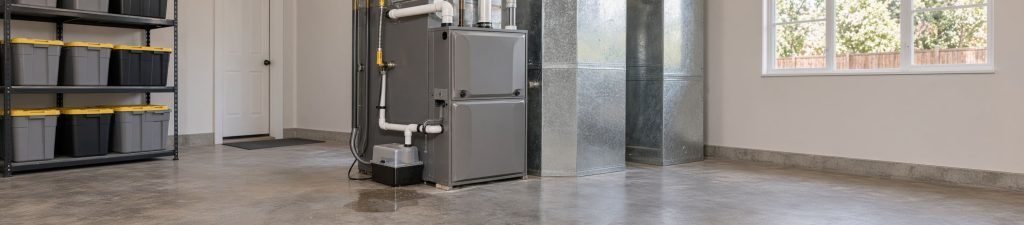
A furnace leaking water when the heat is on usually points to a condensate drainage problem if you have a high-efficiency condensing furnace.
These furnaces produce water during normal heating, but it should drain away without leaking. A clogged condensate trap, blocked drain, failed pump, or loose connection can leave water beneath the unit. On a conventional non-condensing furnace, the source may instead be a humidifier, nearby plumbing, or an abnormal venting condition.
When to Shut Off a Leaking Furnace
Turn off the heating system and arrange an inspection if water is entering the furnace cabinet, reaching electrical components, repeatedly collecting beneath the unit, or appearing with ignition failures or fault codes. Do not restart a leaking furnace just to reproduce the problem.
Gas or carbon monoxide emergency: If a carbon monoxide alarm sounds, leave the building immediately and contact emergency services from outside. If you smell gas, leave and contact your gas utility or emergency services from a safe location. Do not operate electrical switches. Suspected exhaust vent damage also requires professional inspection before the furnace is used again.
Why High-Efficiency Furnaces Produce Water
Burning natural gas produces heat, carbon dioxide, and water vapor. In a conventional furnace, most of that vapor leaves through the exhaust system. A condensing furnace captures more heat from the combustion gases, cooling them enough for some vapor to turn into liquid water.
The condensate forms as flue gases pass through the secondary heat exchanger and associated collection passages. From there, it flows through the manufacturer's condensate collection system, trap, and drain piping to an approved disposal point. Some installations need a condensate pump because gravity drainage is not possible.
Normal condensate drainage path
Some systems also require condensate neutralization. The correct drainage arrangement depends on the furnace and applicable plumbing requirements.
Furnace condensate can be acidic, so compatible drain materials and proper disposal matter. The amount produced varies with gas consumption, operating time, and furnace design. Water flowing through the drain is normal; water dripping onto the floor is not.
Condensing vs. Non-Condensing Furnace: What the Leak Means
Before troubleshooting a drain, establish whether your furnace is supposed to produce liquid condensate during heating.
| Feature | Condensing Furnace | Non-Condensing Furnace |
|---|---|---|
| Typical AFUE | Usually 90% or higher | Commonly around 80% |
| Water during heating | Condensate is expected | Liquid condensate is not expected during proper operation |
| Drain system | Dedicated condensate collection and drainage | No normal furnace combustion-condensate drain |
| Typical venting | Approved corrosion-resistant venting, often plastic | Typically approved metal venting |
| Likely investigation | Drain, trap, pump, collector, and vent configuration | Humidifier, nearby plumbing, external water, or abnormal flue condensation |
AFUE is Annual Fuel Utilization Efficiency. Check the furnace model and manufacturer's documentation to identify the equipment. The efficiency rating and vent material are useful clues, but neither should be used alone.
What Causes a Condensing Furnace to Leak Water?
A blocked drain and a failed condensate pump can both leave water beneath the furnace, but they require different repairs. The first distinction is whether water is backing up inside the drainage system or escaping from a particular connection.
Clogged Condensate Trap or Drain Line
Sediment, biological buildup, or debris can restrict condensate flow. Water may collect in the trap or internal drainage passages until it backs up or escapes through a connection.
Diagnostic clue: The furnace heats normally at first, then leaks or shuts down after condensate has accumulated. The technician should check the trap, drain line, and downstream outlet rather than assuming the visible drain is the only obstruction.
Failed Condensate Pump or Blocked Discharge
When the furnace drains into a condensate pump, water enters a reservoir and should be discharged automatically as the level rises. A pump can have power and make noise without actually moving water.
| Observed Behavior | Possible Explanation |
|---|---|
| Reservoir fills, but pump never starts | Power problem, stuck float, failed motor, or control fault |
| Pump runs, but water level does not fall | Blocked discharge, failed pumping mechanism, or improper discharge arrangement |
| Water escapes from the discharge connection | Loose tubing, damaged fitting, or discharge restriction |
| Heating stops as the reservoir fills | Overflow safety switch may be interrupting furnace operation |
The technician should verify that the pump moves water to the intended disposal point and that its overflow protection works if installed. Replacing the pump will not solve a blockage in the discharge tubing.
Leaking Trap Housing, Tubing, or Collector Connection
A loose hose clamp, cracked plastic fitting, damaged gasket, or disconnected condensate tube may leak even when drainage is otherwise unobstructed. Water can travel along the outside of a pipe or cabinet before reaching the floor, making the puddle appear some distance from the leak.
Diagnostic clue: The first wet point consistently appears around a fitting, hose, or collector connection. Internal connections should be inspected by a technician because some form part of the combustion-pressure system.
Incorrect Drain Slope or Horizontal Furnace Configuration
Condensate must follow the path specified for the furnace's installed position. A sagging drain line can hold water, while an incorrectly arranged trap or hose can prevent proper drainage.
This matters particularly with horizontal furnaces installed in attics. Many models require different condensate connections, trap locations, plugs, or hose routing depending on whether the furnace is installed horizontally left or right.
Diagnostic clue: The leak began after installation, furnace repositioning, drain replacement, or service. Compare the installed arrangement with the manufacturer's instructions for that model and orientation.
Venting or Internal Condensate Collection Problems
Condensing furnace vent systems must move combustion gases while allowing condensate to drain as designed. Improper vent slope, damaged connections, or internal collector problems can allow water to accumulate or escape in the wrong location.
Water near the inducer housing or exhaust connection deserves professional inspection. On some furnace designs, condensate backing up into the collector or pressure-sensing passages can interrupt draft proving and cause a pressure-switch fault.
Important: A pressure-switch fault does not necessarily mean the switch has failed. Condensate backup, an obstructed vent, weak inducer performance, or a sensing-system problem may be responsible. Venting and draft pressure need to be checked before the switch is replaced.
Frozen or Blocked Shared Condensate Drain
Condensate lines routed through exposed spaces can freeze during sufficiently cold weather. A restriction farther downstream can also affect multiple appliances using a common disposal system.
Some installations direct furnace condensate, AC condensate, and humidifier drainage toward a shared disposal point. These arrangements must comply with the manufacturers' requirements and applicable plumbing rules. A blockage downstream can cause water to back up even when the furnace trap itself is clear.
When the leak returns after cleaning: Check the complete discharge path. Repeatedly clearing the furnace trap will not fix a restriction in a shared drain or a poorly routed line farther downstream.
Why Water Can Appear Near a Conventional Furnace
A non-condensing furnace should not routinely produce liquid combustion condensate during proper operation. Water nearby may come from another component, although moisture around the exhaust vent requires particular attention.
Furnace-Mounted Humidifier
A humidifier may operate during heating calls. A leaking supply valve, water distribution tray, connection, or drain can create a puddle that appears to come from the furnace.
AC Coil or Nearby Plumbing
The indoor cooling coil is often mounted above the furnace, but it does not normally generate cooling condensate during gas heating. Residual water, a plumbing leak, or another overhead source may be responsible.
Abnormal Condensation in a Metal Flue
A conventional furnace can develop unwanted flue condensation when combustion gases cool excessively. Improper vent sizing, an unsuitable vent configuration, inadequate draft, or certain operating conditions may contribute.
Persistent moisture can corrode metal vent components and damage the exhaust system. Rust, water stains, or dripping near a vent connection should not be dismissed as an ordinary plumbing issue.
A qualified technician should inspect the vent's condition and sizing and perform appropriate draft and combustion checks. Do not modify the vent or operate a furnace with suspected flue-gas leakage.
How to Narrow Down the Source of the Water
The location of the first visible drip, the timing of the leak, and any heating shutdowns can help identify which components need inspection. You can record these details without opening the combustion compartment.
| What You Notice | What It May Indicate | Useful Next Check |
|---|---|---|
| Water after an extended heating cycle | Condensate accumulating faster than it drains | Inspect trap, downstream line, and drain configuration |
| Pump reservoir overflows | Pump or discharge problem | Test float, electrical supply, and actual discharge |
| Heating stops with a pressure-switch code | Possible condensate backup or draft problem | Check model-specific pressure and drainage conditions |
| Leak began after installation or service | Possible trap, tubing, slope, or orientation error | Compare installation with manufacturer instructions |
| Water near the humidifier during heating | Humidifier supply or drain leak | Inspect humidifier connections and drainage |
| Water or corrosion near metal venting | Possible abnormal flue condensation | Professional vent and combustion assessment |
| Water appears while the furnace is off | Residual drainage, humidifier, plumbing, or another source | Identify the first wet point and check nearby equipment |
A blocked drain, damaged fitting, or failed pump can produce overlapping symptoms. The suspected components still need to be tested before a repair is selected.
What You Can Check Without Opening the Furnace
With the heating system off, gather the following information for the service technician.
- Find the furnace model. Photograph the accessible exterior equipment label so the technician can identify the correct drainage and venting arrangement.
- Photograph the leak. Record the first visible wet location, surrounding piping, and puddle before drying the floor.
- Note when the water appeared. Did it begin during heating, after extended operation, or when the furnace was off?
- Look for an external condensate pump. From a safe position, note whether the reservoir is overflowing. Do not touch wet electrical connections or attempt to test the pump yourself.
- Record any fault code. If the control displays a code through an existing viewing window or accessible display, photograph it without defeating a safety interlock.
Avoid internal repairs: Do not disconnect the condensate trap, blow compressed air into pressure-sensing tubes, jumper a pressure switch, open sealed combustion components, or remove exhaust piping. These parts may affect the furnace's combustion safety controls.
How an HVAC Technician Finds the Leak
Before replacing a pump or clearing a drain, the technician should establish where condensate stops flowing or escapes from the system.
Drainage and Trap
Check trap configuration, drain slope, hose connections, and any cleaning or priming procedures specified for the model.
Pump and Shared Drain
Confirm that water reaches the disposal point, not merely that the pump runs. Test discharge restrictions and applicable overflow protection.
Installation Orientation
For horizontal installations, compare trap placement, hoses, plugs, and condensate connections with the furnace's approved left- or right-hand configuration.
Venting and Combustion
Where moisture appears near the vent or combustion-related codes occur, inspect vent integrity and perform the appropriate draft, pressure, and combustion checks.
After the repair, the furnace should complete a normal heating cycle while condensate drains to its intended outlet. Repaired connections, applicable safety controls, and any previously observed fault conditions should also be checked.
Does a Water Leak Mean the Furnace Needs Replacement?
Usually not. A blocked drain, cracked hose, failed pump, or leaking humidifier connection may be repairable without replacing the furnace.
Replacement becomes a consideration when inspection confirms a major heat-exchanger defect, extensive corrosion affecting combustion components, or several expensive failures in an aging unit. The technician should explain what has failed, whether it can be repaired safely, and how the repair compares with replacement.
Water beneath the furnace does not prove that the heat exchanger is cracked. A suspected heat-exchanger failure requires model-appropriate inspection and testing, not a diagnosis based on a puddle or rust stain.
Preventing Condensate Leaks During Heating Season
For condensing furnaces, seasonal maintenance should cover the drainage components as well as combustion and airflow.
- Have the condensate trap, collector connections, and drain inspected and serviced according to the manufacturer's instructions.
- If a condensate pump is installed, have its discharge and overflow safety operation checked.
- After installation or drain work, verify slope and model-specific routing, especially on horizontal attic installations.
- Report recurring moisture, corrosion, or heating shutdowns rather than repeatedly resetting the furnace.
Frequently Asked Questions
Is some water normal when a high-efficiency furnace runs?
Yes. A condensing furnace produces liquid condensate during heating. It should flow through the designated drain, not leak onto the floor or into the cabinet.
Can a furnace leak water only after running for several hours?
Yes. A partial blockage may allow condensate to build up during extended heating. The trap, drain line, and pump, if present, are the main components to investigate.
Can a condensate leak trigger a furnace pressure-switch error?
Yes, on some condensing furnace designs. Backed-up water can interfere with draft proving. The drain and venting system should be checked before replacing the pressure switch.
Why does water appear below the furnace when heating is off?
Residual condensate may continue draining after operation. Water can also come from a humidifier, shared drain, nearby plumbing, or another appliance. The first wet point helps narrow the source.
Is a leaking furnace dangerous?
It can be. Water may reach electrical components or indicate a venting defect. An active unexplained leak, moisture inside the cabinet, or a combustion-related fault warrants shutting down the furnace and arranging an inspection.
Why the Source of the Leak Matters
A blocked condensate line, failed pump, leaking humidifier, and defective exhaust vent require different repairs. The location and timing of the water can narrow the possibilities, but drainage and combustion-related components must be checked before the cause is confirmed.
MaksBuilder provides furnace repair and diagnostic services in Orange County for heating failures, condensate drainage problems, and related equipment faults.