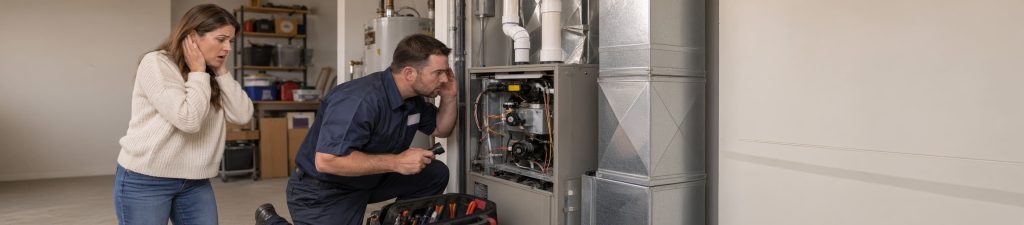
A furnace can make several different sounds that homeowners describe as a bang, boom, pop or thump. The most useful clues are when the sound happens and where it comes from.
A booming furnace does not automatically mean the burners are dirty. Burner contamination is one possible contributor, but ignition components, flame carryover, burner condition, gas delivery and controls can create similar symptoms.
Where Is the Noise Coming From?
First identify the point in the heating cycle when the noise occurs. A boom as flame establishes is a different pattern from a metallic pop several seconds later when heated air begins moving through the duct system.
Bang or boom at ignition
This can involve delayed or abnormal gas ignition and deserves prompt diagnosis.
Pop from a wall or duct
Temperature and pressure changes can make sheet-metal ductwork flex, expand or move.
Rhythmic thump
A repeating mechanical sound may involve the blower wheel, motor or another moving component.
Metallic pop or knock
Furnace cabinet and duct metal can expand or contract as temperature changes.
| What you notice | What it may point toward | Useful detail to record |
|---|---|---|
| Strong boom as burners ignite | Ignition timing, burner ignition, flame carryover or another combustion-related condition | Whether it happens every heating cycle or only occasionally |
| Metallic pop after blower starts | Duct expansion, pressure change, cabinet movement or loose sheet metal | Whether the noise comes from the furnace, wall, ceiling or register |
| Repeating thump while air moves | Blower wheel, motor, mounting or another rotating component | Whether the rhythm changes during blower operation |
| Bang or pop near shutdown | Thermal contraction of ductwork, cabinet panels or other sheet metal | Whether it occurs as heat stops or after the blower shuts down |
How a Gas Furnace Starts Before the Blower Turns On
Understanding the normal startup sequence helps explain why a furnace may boom. The exact sequence varies by model, but many modern induced-draft gas furnaces follow this simplified process:
The inducer is the draft fan that helps establish the intended combustion-air and venting conditions before burner ignition. On furnaces with electronic flame sensing, the control also confirms that flame has been established before normal operation continues.
A boom that occurs as the burners light therefore points to a different part of the heating cycle than a bang that begins only when the indoor blower starts.
What Can Cause a Boom at Burner Ignition?
A gas furnace is designed to establish flame in a controlled sequence. If ignition does not occur as intended, startup can become noticeably louder than normal.
Igniter or spark operation
The ignition device must operate at the correct point in the startup sequence. Its condition, position and control can affect how promptly flame establishes.
Flame carryover
Flame carryover describes how flame spreads from one burner to the next. Contamination, corrosion, deterioration or alignment problems can interfere with it.
Gas-valve or pressure conditions
Gas-valve operation and furnace-specific pressure conditions may need to be checked against manufacturer specifications by a qualified technician.
Electrical or control problems
Wiring and furnace controls can interfere with normal ignition or flame confirmation even when the burner assembly is not the original problem.
Delayed Ignition and Burner Problems
Delayed ignition means fuel does not ignite at the intended point in the startup sequence. When ignition occurs later than intended, it can happen more abruptly and create an unusually strong pop, bang or boom.
Delayed ignition describes the event, not the failed component. Possible contributing conditions include the ignition device, burner ports, flame-carryover areas, burner alignment, gas delivery or furnace controls.
Why does my furnace make a loud bang when it turns on?
If a gas furnace bangs at the exact moment the burners light, delayed or otherwise abnormal ignition is one important possibility. If the bang occurs several seconds later when the blower starts, ductwork, cabinet, airflow or mechanical causes become more likely.
If the furnace has trouble lighting rather than producing a boom, see furnace ignitor problems and why a furnace will not light .
Can Dirty Burners Cause a Boom?
Yes, but dirty burners are only one possible cause.
Deposits, corrosion or debris in burner or flame-carryover areas can interfere with normal ignition. Similar symptoms can also result from the ignition system, burner alignment, furnace controls or gas delivery.
Cleaning should follow diagnosis rather than replace it. A furnace that repeatedly booms at ignition needs its startup sequence evaluated so the repair addresses the actual abnormal condition.
Sheet-Metal Expansion vs Combustion Noise
Not every furnace bang comes from combustion. Forced-air systems also contain sheet-metal ducts, cabinet panels and internal metal components that heat, cool and react to changing air pressure.
Sound occurs as flame establishes
A boom that repeatedly occurs at burner ignition points toward the ignition or combustion sequence and deserves prompt diagnosis.
Sound follows heat or airflow
A metallic pop from a wall, register, duct or cabinet after airflow starts may result from sheet-metal expansion, flexing or pressure changes.
Heat-exchanger metal also changes temperature substantially during operation. Thermal expansion can contribute to metallic sounds. Damage to a heat exchanger is a separate issue that requires inspection. A cracked heat exchanger cannot be diagnosed from a bang or rattle alone.
Blower and Duct Banging
If the banging begins only after the indoor blower starts, airflow and mechanical components become more relevant than burner ignition.
Duct expansion or flexing
Sheet metal can move as temperature and air pressure change. HVAC static pressure is measured pressure within the duct system associated with resistance to airflow.
Loose panels or sheet metal
A cabinet panel, duct joint, damper or nearby connection may pop or shift when airflow begins.
Blower wheel or motor
A loose, damaged or unbalanced rotating component may produce a repeating thump while the blower operates.
Airflow restriction
A heavily restricted filter, obstructed return or duct problem can change system pressure and make existing duct or cabinet movement more noticeable.
What If You Have an Electric Furnace?
An electric furnace does not have gas burners, a gas valve or delayed gas ignition. Banging or thumping is more likely to involve the blower, motor, cabinet, ductwork, mounting or heating elements.
Why Does the Furnace Bang After It Shuts Off?
A post-shutdown pop can come from cooling metal.
Ductwork and furnace panels can contract as they cool, producing a pop or knock after the burners stop or after the blower shuts down. A violent bang, scraping, strong vibration or a new worsening sound should still be inspected rather than assumed to be normal expansion.
Is a Booming Furnace Dangerous, and Should You Keep Using It?
Do not keep operating it as if the sound is normal
If a gas furnace repeatedly makes a strong boom as the burners ignite, stop normal use and arrange professional diagnosis rather than continuing to restart the furnace.
A different level of urgency
A brief metallic pop from duct expansion without combustion or safety warning signs is a different pattern. If it is new, unusually strong or getting worse, have it inspected.
When to Leave Immediately: Gas Leak or CO Alarm
Gas-leak signs and a carbon-monoxide alarm take priority over furnace troubleshooting. Do not remain beside the equipment to collect observations, switch it off or investigate the source.
What Can a Homeowner Safely Check?
If the noise occurs only after the blower starts or seems to come from ductwork, airflow or cabinet movement, a few basic airflow checks may be useful. A dirty filter, blocked return or closed register does not explain a strong boom that occurs at burner ignition.
- Note whether the sound occurs at burner ignition, when the blower starts, during steady operation or near shutdown.
- Note whether the sound seems to come from the furnace cabinet, a nearby duct, a wall, ceiling or supply register.
- For blower, airflow or duct-related noise, check an accessible HVAC filter and replace it if it is visibly loaded, following the filter or equipment instructions.
- For airflow-related noise, make sure normal supply registers and return-air openings have not been accidentally blocked by furniture or other objects.
- If the sound happens during otherwise normal operation and there are no safety warning signs, a short recording can help a technician identify the timing and character of an intermittent noise. Do not repeatedly cycle the furnace to reproduce it.
- Record any fault code that is visible without removing an access panel or bypassing a safety switch.
What Should a Homeowner Avoid Doing?
Listening for when and where the noise occurs is useful. Adjusting combustion equipment is not a safe homeowner diagnostic step.
- Do not adjust the gas valve or manifold pressure.
- Do not reposition, drill, modify or adjust burner components.
- Do not bypass pressure, rollout, limit, door or other safety switches.
- Do not operate the furnace with an access-panel safety switch defeated.
- Do not repeatedly cycle power to force additional ignition attempts.
- Do not attempt gas-valve or burner adjustment based only on an online symptom list.
If the furnace lights but then shuts down, flame sensing is a different diagnostic branch. See furnace flame sensor problems and symptoms .
How a Technician Diagnoses Furnace Noise
Diagnosis starts by matching the sound to the exact stage of the heating cycle where it occurs.
Does your furnace bang or boom when it starts?
Diagnosis should identify whether the sound originates during ignition, blower operation, furnace-cabinet movement or ductwork operation before deciding what needs repair.