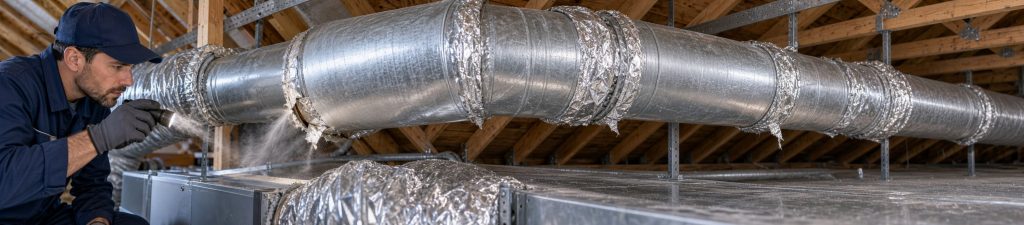
If one bedroom stays warm while the rest of your house cools normally, the problem might be in the ductwork rather than the air conditioner. A loose duct connection can send cooled air into the attic instead of the room where you need it.
Other signs of leaking air ducts include dusty air, longer AC cycles and unexplained increases in energy use. Here's what to look for and how to tell whether a duct leak deserves a closer inspection.
- One or more rooms are harder to heat or cool.
- Airflow from certain vents has become weaker.
- Dusty or attic-like odors appear when the system runs.
- Your AC or furnace runs longer than it used to.
- Heating or cooling bills have increased without an obvious reason.
- You can see a separated duct connection, hole or open seam.
The first five are warning signs, not proof. A visibly disconnected duct is much stronger evidence of a leak.
What Is Duct Leakage?
Your home's air ducts carry heated or cooled air between the HVAC equipment and the rooms. Duct leakage happens when air passes through gaps, holes or poorly sealed connections instead of staying inside the intended duct path.
For example, a duct running through a hot attic may have a loose connection. When the AC turns on, some of the cool air escapes before reaching the bedroom vent.
Leaks can also occur in return ducts, which carry indoor air back to the HVAC equipment. Instead of losing conditioned air, a return leak can pull unwanted air from the attic or another building cavity into the system.
Leaks in an unconditioned attic or garage are especially important because they connect the HVAC air system with air that can be much hotter, colder or dirtier than the air inside your home.
Uneven Temperatures
One of the most noticeable warning signs is a room that refuses to reach the same temperature as the rest of the house.
Imagine your living room feels comfortable at 74°F, but a nearby bedroom remains at 80°F. If the duct serving that bedroom has come loose, part of its cooled air may be escaping before reaching the room.
A duct leak becomes more likely when:
- The temperature problem appeared suddenly.
- The affected room also has noticeably weaker airflow.
- The problem started after someone worked in the attic.
- Several rooms connected to the same duct section became uncomfortable around the same time.
In Orange County, afternoon sunshine can also make west-facing rooms warmer. If the room gets hot only when sunlight hits its windows, the ductwork may not be responsible.
Weak Airflow
A leaking supply duct can lose air before it reaches a register. You might notice that one vent delivers much less air than it did a few weeks earlier.
Suppose the bedroom vent used to move a noticeable amount of air. After attic work, you can barely feel anything coming from it. A disconnected duct connection is one possibility worth checking.
Weak airflow does not always mean the duct is leaking. A crushed flexible duct, closed damper or blockage can produce the same result.
If your main problem is reduced airflow throughout the home, see our guide to weak airflow from AC vents.
Dust and Attic Air
A leak in a return duct can pull air from an attic, crawlspace or wall cavity into the HVAC system. That air may contain dust, insulation particles or unwanted odors.
For example, you might notice a dusty attic smell shortly after the blower starts, even though no one has opened the attic access.
Some of the particles may be captured by the HVAC filter. Whether they reach the living space depends in part on where the leak is located relative to the filter.
Dark marks around a vent often come from ordinary room dust collecting where air moves across the ceiling or wall. Dirty filters, poor filter fit and household air leaks are other possible explanations.
A musty odor is also not enough to diagnose leaking ductwork. Moisture around an evaporator coil or condensate drain can cause similar smells.
Longer HVAC Run Times
If cooled air escapes into the attic, your AC may have to run longer to bring the house to the temperature set on the thermostat.
You might notice that the system used to cool the home in a reasonable time but now seems to run almost continuously on warm afternoons.
The important clue is a change from the system's normal behavior under similar weather conditions.
Longer run times can also come from dirty filters, extreme outdoor temperatures, insulation problems or aging equipment. Check for other duct-leakage signs before assuming the ductwork is responsible.
Higher Energy Bills
Leaking ducts can waste energy even when the equipment itself is working correctly.
When cool air escapes into an attic, the AC has to replace cooling that never reached the rooms. During winter, leaking supply ducts can waste heated air in the same way.
Compare bills from similar months, along with thermostat settings and weather conditions. A sudden increase in electricity costs is worth investigating, but the bill alone cannot identify a duct leak.
The ENERGY STAR program explains how leaky ductwork affects home comfort and energy efficiency.
Supply-Side vs Return-Side Leakage
There are two main places where duct leaks occur, and each affects the house differently.
Supply-Side Leak
Supply ducts deliver heated or cooled air to rooms.
What happens: Air escapes before it reaches the vent.
What you notice: Poor room comfort, reduced airflow or wasted heating and cooling.
Return-Side Leak
Return ducts bring indoor air back to the HVAC system.
What happens: The blower draws air through an unwanted opening.
What you notice: Dusty odors, unwanted hot attic air or extra heating and cooling demand.
A technician checks both sides because repairing a supply leak will not fix a separate opening in the return duct.
Duct Leakage vs Restricted Airflow
These two problems can feel similar inside the house, but they require different repairs.
With a duct leak, air escapes through an opening. With restricted airflow, air has trouble moving through the duct because something is blocking or squeezing the intended path.
Think of a garden hose. A hole in the hose loses water along the way. A kink in the hose restricts the flow. HVAC ducts can have either problem, and occasionally both.
A disconnected duct needs proper reattachment and sealing. A crushed duct needs its damaged or restricted section corrected.
Duct Leakage vs High Static Pressure
High static pressure is a different issue. It generally means the HVAC blower is working against too much resistance in the measured air path.
A dirty filter, undersized return duct or crushed duct can contribute to excessive resistance. A duct leak, on the other hand, allows air to move through an unintended opening.
A pressure measurement does not, by itself, prove that ductwork is leaking. Learn more in our article on high HVAC static pressure symptoms.
Can Duct Leakage Be Seen Visually?
Yes. Some leaks are easy to spot, especially when ductwork is exposed in an accessible attic, garage or utility area.
Look for:
- A duct that has pulled away from its metal connection.
- An open gap between two duct sections.
- A visible hole or split in the air-carrying duct.
- Loose or missing sealing material around a joint.
- A disconnected branch hanging away from the main duct.
Flexible ductwork usually has an inner air-carrying liner, insulation and an outer protective covering. A torn outer covering does not automatically mean the inner duct is leaking.
A visible opening in the inner liner or a separated connection is much stronger evidence.
Not all leaks are visible. Small gaps can hide behind insulation or inside enclosed walls and ceilings.
What Can You Check Yourself?
You do not need HVAC tools to make a few useful observations before calling a technician.
- Identify the affected rooms. Note which rooms are uncomfortable and whether the problem happens every time the AC or furnace runs.
- Compare the vents. With the system running, notice whether one supply vent feels much weaker than similar vents nearby. This is only a rough comparison, not an airflow measurement.
- Check simple causes first. Make sure the affected register is open and the air filter is not overdue for replacement. Neither step proves or rules out a leak.
- Look at safely accessible ductwork. If a connection is visible from a normal, secure location, check for obvious gaps or separation. Photograph anything unusual.
Attics may have exposed wiring, low clearances, extreme heat and ceiling areas that cannot support your weight. Do not step into an unsafe attic or disturb insulation to look for leaks. Leave inaccessible ducts and permanent repairs to qualified personnel.
Avoid using ordinary cloth-backed duct tape for a permanent repair. Proper duct repairs typically involve securing the connection and applying an appropriate HVAC-rated sealant or tape.
How Duct Problems Are Diagnosed
A technician normally starts by checking the duct run serving the rooms where the trouble occurs.
The inspection may find a separated connection, damaged duct liner or an opening near a supply or return box. If the problem is obvious and accessible, a local repair may be enough.
When the source is unclear, additional testing may be useful.
Visual Duct Inspection
Looks for damaged sections, open joints and disconnected ducts that can be reached safely.
It can confirm a visible leak but cannot measure leakage across the entire duct system.
Duct Leakage Test
Uses specialized equipment to pressurize the duct system and measure how much air escapes under the test conditions.
It measures leakage, but does not automatically reveal the exact location of every opening.
After a leakage test, the technician may still need to inspect individual joints and duct sections to locate the openings responsible for the measured air loss.
Airflow or static-pressure measurements may also be useful when the symptoms point to a restriction rather than a leak. These are separate tests.
After repairs, the technician can check the affected room's airflow and, when appropriate, repeat leakage measurements to confirm improvement.
Replacing every duct is rarely the first step for a single loose connection. The decision depends on the condition of the remaining ductwork and whether the existing layout can deliver the airflow the home needs.
Frequently Asked Questions
Can air ducts leak without visible damage?
Yes. Small gaps can hide under insulation, behind drywall or at joints that are difficult to reach. A visual inspection may not find every leak.
Does dust around an AC vent mean the duct is leaking?
No. Dust can collect around a vent because of normal indoor airflow. A return-duct leak is one possibility when unwanted attic air is entering the system, but dust marks alone are not a diagnosis.
Can leaking ducts increase my electricity bill?
Yes, especially when cooled air escapes into an unconditioned attic. Your AC may need to run longer to maintain the same indoor temperature. Weather, electricity rates and other HVAC problems also affect the bill.
Can I fix a leaking duct with regular duct tape?
Ordinary cloth-backed duct tape is not a reliable permanent seal. HVAC duct connections should be mechanically secure and sealed with suitable duct mastic or approved HVAC sealing tape.
Do leaking air ducts need to be replaced?
Not always. A loose joint or a short damaged section can often be repaired. Replacement becomes more reasonable when large portions of the ductwork are deteriorated, damaged or poorly designed.
Concerned About Leaking Air Ducts?
If one room has lost airflow, the house has developed unexplained temperature differences, or you have spotted a disconnected duct, the next step is to inspect the affected ductwork.
MaksBuilder provides ductwork and airflow services in Orange County. An inspection of accessible supply and return ducts can help identify visible defects and determine whether further testing or repairs are needed.
If you specifically need a measured duct-leakage test, confirm its availability and scope when scheduling.