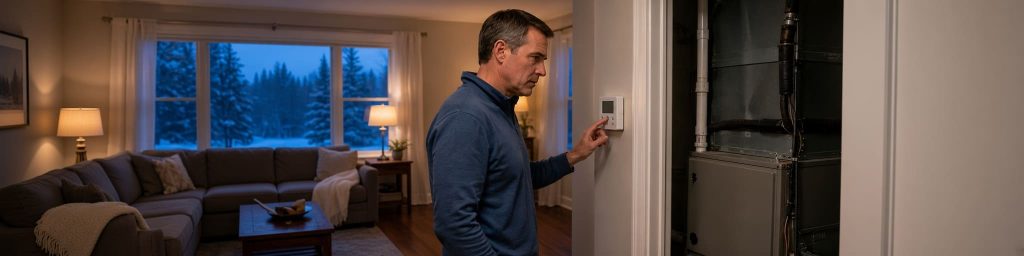
What to Check When the Heat Does Not Come On
A furnace that seemed fine at the end of last winter may fail the first time it is asked to heat again. After months of sitting idle, the system may reveal a thermostat setting issue, lost power, a closed gas valve, an ignition fault, weak flame sensing, a venting problem, a blower issue, or a safety shutdown that prevents the cycle from continuing.
The Short Answer
If a furnace will not start on the first cool night, begin with the basics: make sure the thermostat is actually calling for heat, the furnace has electrical power, and the gas supply is available. If those items are in order, watch where the startup sequence stops. A furnace that stays completely silent points to a different problem than one that starts the inducer, lights briefly, and then shuts down.
Why This Often Happens After Summer
Heating equipment can sit unused for months in warmer parts of California. During that time, a small issue can go unnoticed because the furnace is not being asked to operate. A thermostat schedule may be left in cooling mode, batteries may weaken, the furnace service switch may get turned off during other work, or a gas shutoff may be left closed after maintenance.
Dust, oxidation, or drainage issues on high-efficiency units can also show up when the furnace is finally asked to start again. The first heating call of the season is often the first real test of the complete ignition, combustion, safety, and airflow sequence.
What to Check First
- Set the thermostat to HEAT. Confirm the system is not in COOL, OFF, or a schedule mode that is preventing a heating call.
- Raise the setpoint. Increase the temperature several degrees above room temperature and give the system a moment to respond.
- Check thermostat power. If the thermostat uses batteries, replace them if needed. A lit display does not always mean the control is communicating correctly with the heating system.
- Check the furnace switch and breaker. The service switch near the furnace may look like a normal light switch. Also verify that the breaker is on.
- Check the filter. A badly clogged filter can reduce airflow and contribute to a high-limit shutdown after ignition.
- Observe what happens next. Listen for the inducer, watch for burner ignition if the furnace provides a safe viewing point, and note whether the blower starts.
- Stop if you notice a safety concern. Gas odor, soot, damaged venting, repeated safety trips, or a carbon monoxide alarm should end homeowner troubleshooting.
How a Gas Furnace Normally Starts
The point where startup stops often narrows the fault. While details vary by model, many modern gas furnaces follow this general order:
If the system fails a required step, the control board may stop the cycle or enter a lockout rather than allow unsafe operation.
Thermostat Mode and Control Settings
The furnace may be fine while the control setting is not. Check that the thermostat is in HEAT, not just FAN ON. A blower running by itself does not mean the burners are operating.
Programmable and smart thermostats add more variables, including schedules, vacation settings, temporary holds, energy-saving logic, or setup changes after a battery replacement or power loss. If the thermostat appears to be the issue, set it manually to HEAT, raise the temperature above the current room temperature, and watch for a clear response.
Check Electrical Power
A gas furnace still relies on electricity for its control board, inducer motor, ignition system, blower, gas-valve controls, and safety circuits. If the furnace has no power, it may remain completely silent when the thermostat calls for heat.
Check the service switch and breaker. If the breaker has tripped, follow the furnace and electrical panel instructions. If it trips again, stop resetting it. A repeated trip points to an electrical or equipment fault rather than a normal seasonal startup issue.
Gas Supply and Shutoff Issues
If the furnace has power and begins to start but never produces flame, fuel supply becomes part of the diagnosis. In some homes, a gas shutoff may have been closed during remodeling, appliance work, maintenance, or utility service.
If an accessible shutoff appears to be closed, do not force or reposition it unless its correct operating position is clearly identified by the appliance instructions. If you are not certain why it is closed, stop rather than guessing.
Stop Immediately if You Smell Gas
Do not keep trying to start the furnace if you smell gas. Leave the building and contact the gas utility or emergency services from a safe location.
When the Igniter Does Not Produce Flame
Many modern furnaces use electronic ignition rather than a standing pilot. If the inducer runs but the burners never light, the fault may involve the igniter, gas valve, control board, wiring, or fuel delivery. A failed hot-surface igniter is one possibility, but it is not the only one.
On older equipment with a standing pilot, relighting should follow the exact manufacturer procedure. Generic instructions are not a substitute for the furnace label and manual.
Burners Light, Then Shut Off
When the burners ignite and then quickly go out, flame sensing is one of the first areas to evaluate.
What the Flame Sensor Does
The flame sensor confirms that burner flame is present after the gas valve opens. If the control board does not receive the expected signal, it closes the gas valve to prevent unburned gas from continuing to flow.
Why Flame Sensing Can Fail
Oxidation, contamination, grounding problems, damaged wiring, burner issues, or a weakened sensor can interfere with flame verification. The visible symptom is often brief ignition followed by shutdown and repeated retries.
Do Not Assume the Sensor Is Always the Cause
A dirty flame sensor can cause this symptom, but combustion problems, gas-delivery issues, grounding faults, and electrical problems can produce a similar pattern.
Pressure Switch, Venting, and Draft
Before ignition, the furnace must confirm that the inducer has created the expected pressure condition. If that signal is missing, the board will usually stop the cycle before the burners light.
A pressure-switch fault code does not automatically mean the pressure switch itself has failed. The underlying issue may be an inducer problem, blocked intake or exhaust piping, a split or disconnected pressure tube, water in the tubing, condensate trouble on a high-efficiency furnace, or another venting-related problem.
Never Bypass the Pressure Switch
The pressure switch is part of the combustion safety sequence. Jumping it to see whether the furnace starts removes a safeguard rather than correcting the fault.
Homeowners should limit themselves to visible checks. An obviously obstructed outdoor intake or exhaust termination can matter, but venting should not be disassembled, modified, or bypassed as a DIY test.
Burners Run but Warm Air Never Arrives
The blower does not start instantly; a short delay is normal. If the burners continue operating but the home still gets no airflow after the expected delay, the fault may involve the blower motor, control board, ECM module on applicable systems, capacitor on applicable motors, wiring, or another blower-control component.
Airflow restriction matters as well. A dirty filter or another major restriction can cause the furnace to overheat. When furnace temperature rises beyond the allowed range, the high-limit control may shut off the burners to protect the equipment.
Why the Furnace May Shut Itself Down
A furnace may stop even when no part looks obviously broken. In many cases, the shutdown is intentional because one of the required safety conditions has not been satisfied.
- ignition did not complete correctly;
- flame was not verified;
- the expected draft condition was not established;
- furnace temperature rose too high;
- a rollout or another manual-reset safety opened;
- the control board detected a fault and entered lockout.
Match the Symptom to the Startup Stage
Fault Codes Can Narrow the Search
Many furnaces have a diagnostic LED that flashes a stored fault code. If the code can be viewed safely, record it before disconnecting power because some control boards clear useful information after a reset.
Compare the flash pattern with the label on the furnace or the documentation for the exact model. A fault code usually identifies the part of the sequence that failed; it does not necessarily identify the exact component that needs replacement.
When to Stop Troubleshooting
Do not continue homeowner-level troubleshooting if you notice a gas odor, soot, loose or damaged venting, repeated safety trips, abnormal burner behavior, persistent burning odors, or a carbon monoxide alarm. Carbon monoxide is colorless and odorless, so it cannot be detected by smell. Functioning CO alarms remain important in homes with fuel-burning appliances.
Is a Dusty Smell Normal on the First Heating Cycle?
A light dusty odor can occur when a furnace runs for the first time after sitting unused. Small amounts of dust on warm surfaces may produce a temporary smell that fades as the system continues operating.
A strong electrical smell, persistent burning odor, visible smoke, soot, or anything that suggests fuel leakage should not be treated as ordinary first-use dust.
When the Furnace Still Will Not Complete a Heating Cycle
Once the basic checks are done, the key diagnostic question is where the sequence stops. Testing the igniter, gas controls, flame signal, blower, inducer, pressure-switch circuit, airflow conditions, and safety controls requires the right instruments and a model-specific diagnosis.
Furnace Repair ServiceFrequently Asked Questions
Why Would a Furnace Work Last Winter but Not Start Now?
The first heating call after months of inactivity can expose a thermostat or power issue, an interrupted fuel supply, or a fault in the ignition, airflow, venting, or safety sequence that was not noticeable during cooling season.
Why Does the Furnace Light and Then Turn Off Right Away?
That pattern often points toward flame verification, although burner condition, grounding, wiring, gas delivery, or control problems can also be involved.
Can a Dirty Filter Keep the Furnace From Heating Properly?
Yes. A heavily restricted filter can reduce airflow and contribute to overheating, which may trigger a high-limit shutdown.
Should I Keep Resetting the Furnace if It Locks Out?
No. Repeated resets do not correct the cause of an ignition or safety failure and may erase useful diagnostic information from some control boards.