Individual System Replacement
Replace an individual heating or cooling system when the project is limited to one dwelling unit or one defined building area.
MaksBuilder provides HVAC repair, preventive maintenance, replacement, controls and planned system upgrades for qualifying multifamily properties within its South Orange County service area. Service is intended for property owners, property managers, HOA or community management teams and multifamily operators.
Work can include individual dwelling-unit systems and qualifying common-area or building HVAC equipment, with scheduling around occupied units, resident access and planned shutdown windows.
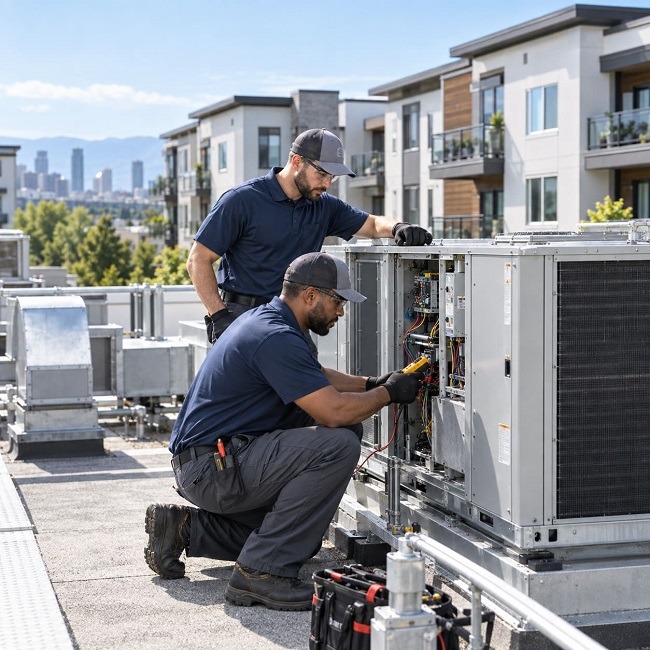
Multifamily HVAC service covers primarily residential properties with multiple dwelling units, including apartment communities and qualifying HOA-managed residential properties. HVAC work may involve individual residential systems, common-area equipment or both.
Multifamily properties are primarily residential. The operating challenge is usually coordinating HVAC work across dwelling units, residents, common areas and multiple similar systems.
A property combining residential space with substantial retail, office, restaurant or other nonresidential occupancies has a different HVAC and scheduling profile.
For those properties, see Mixed-Use Building HVAC Services .
Multifamily HVAC repair can involve one dwelling unit, several units reporting similar symptoms or equipment serving a residential common area. Diagnosis starts with the reported problem and the HVAC system serving the affected space.
Service can include cooling failures, no-heat conditions and recurring heating or cooling problems affecting individual units or qualifying common areas.
No cooling or no heat does not identify the failed component by itself. The cause may involve electrical operation, airflow, controls, condensate drainage, fan or blower performance, heating components or refrigeration-related operation.
When the affected equipment is a packaged rooftop unit, see Commercial Rooftop Unit Repair .
A multifamily HVAC maintenance program should keep each service task connected to the correct unit, common area or piece of building equipment. This is especially useful when multiple similar systems are maintained during the same visit or service cycle.
The maintenance scope can define covered equipment, visit frequency, unit-access procedures, filter requirements, recurring tasks, documented findings and items that require separate repair approval.
For the broader service scope, see Commercial HVAC Maintenance .
Multifamily HVAC projects may involve one failed system, several similar units, common-area equipment or a phased upgrade across part of the property. Planning should account for installed equipment, occupied units, access, scheduling and the sequence of work.
Replace an individual heating or cooling system when the project is limited to one dwelling unit or one defined building area.
Coordinate installation or replacement of several similar systems while keeping access, unit scheduling and project sequencing organized.
Divide a larger project into practical phases when simultaneous replacement across an occupied property is not necessary or practical.
Repeated service calls across equipment of similar type or age can be reviewed together rather than treating every failure as an unrelated event. Property management can use equipment condition and service history to identify immediate repairs and systems that should enter a planned replacement phase.
Multifamily buildings can contain different HVAC configurations. Equipment type and the area it serves should be confirmed before repair, maintenance or replacement work is defined.
Individual residential units may have separate indoor and outdoor equipment. Diagnosis should consider the indoor section, thermostat and outdoor equipment serving the affected unit.
Heat-pump diagnosis can involve heating and cooling operation, airflow, thermostat configuration, electrical components and controls.
Common areas or other portions of a property may use packaged rooftop equipment requiring safe, authorized roof access and identification of the area served.
A comfort complaint can originate in the control system rather than in the heating or cooling equipment itself. Multifamily troubleshooting may include thermostat response, low-voltage wiring, sensors, operating settings and whether the HVAC system receives the requested command.
Commercial HVAC Controls & ThermostatsWeak airflow or uneven temperatures do not automatically mean the HVAC equipment needs replacement. The problem may be related to the equipment, filter, blower, return path, accessible ductwork, controls or another airflow restriction.
Weak vents, rooms that stay hotter or colder than expected, excessive airflow noise or slow temperature recovery can justify checking the system and accessible airflow path serving that unit.
The cause should be identified before broader ductwork or equipment replacement is proposed.
Repeated comfort complaints across multiple units or a common area may require checking whether the issue is isolated to individual systems or connected to shared equipment, controls or airflow conditions.
Multifamily HVAC work can require entry into occupied homes as well as access to roofs, equipment areas and common spaces. Access requirements, affected units and applicable shutdown windows should be established before work begins.
Identify which dwelling units require entry and how property management will coordinate access.
Organize work around approved appointment windows, occupied spaces and the number of systems included.
Confirm the dwelling units, common areas and HVAC systems included in the approved service or project scope.
Plan equipment shutdowns, roof access and higher-noise work around occupied areas where practical.
For this service, a multifamily property is primarily residential and contains multiple dwelling units, such as an apartment community. HVAC work may involve individual residential systems, common-area equipment or both.
Yes, when the property, equipment and requested scope are suitable for grouped service. Providing the number of affected systems, access requirements and relevant property details in advance helps define the visit.
Recurring maintenance can be proposed for qualifying properties. The service scope should identify covered equipment, maintenance frequency, access requirements, recurring tasks and follow-up items requiring separate approval.
Provide the property location, property or community name, approximate number of HVAC systems involved, current repair, maintenance or project need, known equipment types, access requirements and preferred service window.
California Contractor License #1095368 · View license information